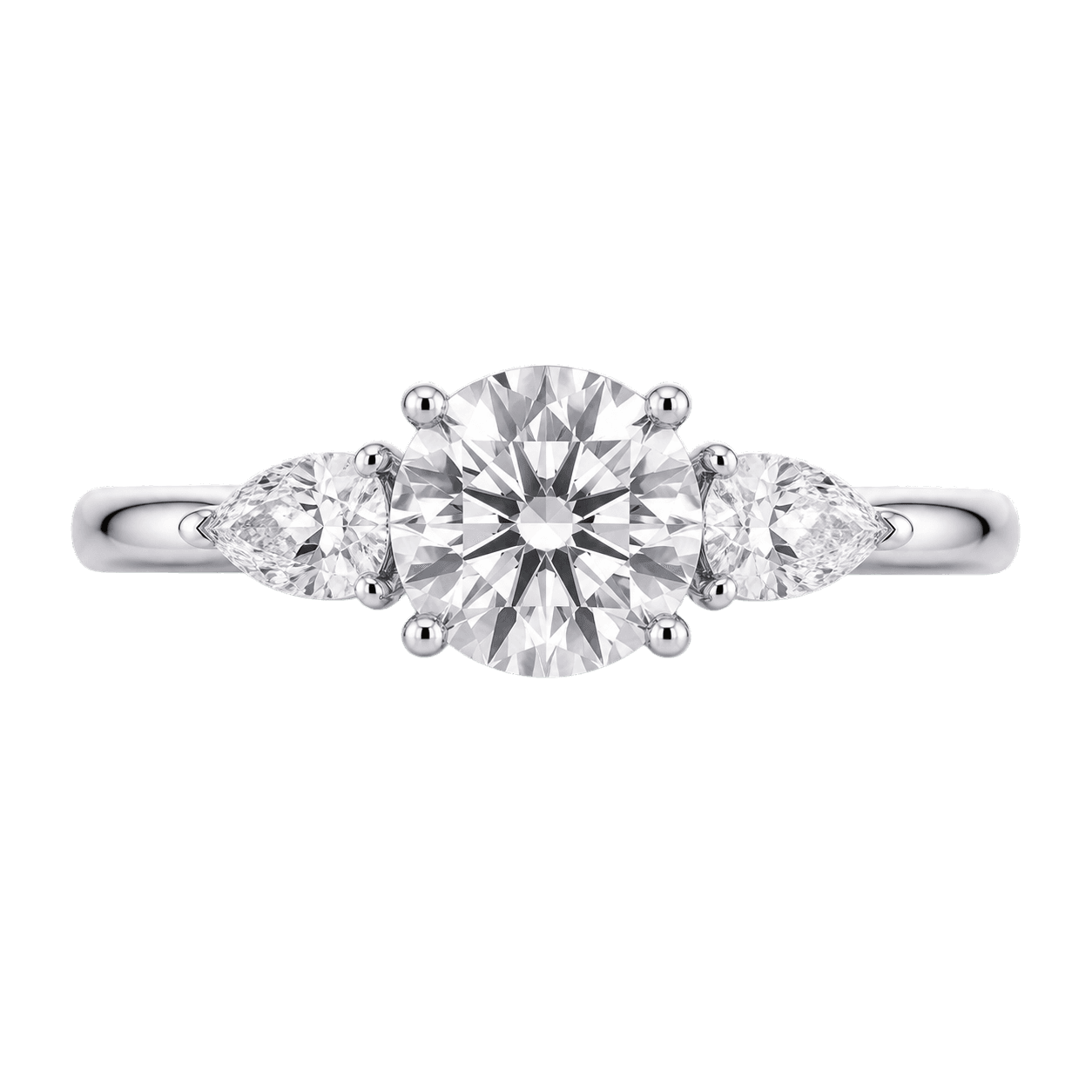
Decide whether this ring is worth insuring at all
Start with one honest question: if the ring vanished tomorrow, could you replace it without financial pain? For a ring costing a few hundred dollars, years of premiums can approach a meaningful fraction of the replacement cost, and going uninsured — deliberately, with eyes open — is a defensible choice. For a ring that took months to save for, a total loss you cannot absorb is exactly what insurance exists for.
The other input is how the ring will live. Daily wear on active hands, travel, swimming, and gym locker rooms all raise the odds of loss or damage; a ring worn occasionally and stored in a safe faces less risk. There is no universal threshold, but the pattern is simple: the more the loss would hurt and the more exposure the ring gets, the stronger the case for coverage.
The three routes: rider, standalone policy, or none
There are only three real options, and each trades cost against coverage. A homeowners or renters policy alone is not one of them — standard policies cap jewelry theft payouts at a low limit, often around $1,000 to $2,000 total, and typically exclude simply losing the ring. To get real coverage through a home policy, you schedule the ring as listed property, which adds a premium and usually requires documentation of its value.
Standalone jewelry insurers — specialized providers that only insure jewelry and watches — are the other paid route. They tend to cover more failure modes, including loss and mysterious disappearance, often with no deductible, and a claim does not touch your homeowners record. Compare both quotes; neither route is universally cheaper.
Schedule it on a home policy
A rider or scheduled-property endorsement on homeowners or renters insurance. Convenient and often cheap, but claims can raise your whole policy’s premium, and coverage terms vary widely.
Standalone jewelry insurer
A dedicated policy from a jewelry specialist. Usually covers loss, theft, damage, and mysterious disappearance, with repair or replacement handled by people who insure rings all day.
Deliberately uninsured
Rational for inexpensive rings or buyers who can absorb a total loss. The mistake is not skipping insurance — it is skipping it by default without running the numbers.
What ring insurance actually costs
The common heuristic is roughly 1 to 2 percent of the ring’s value per year — on the order of $10 to $20 annually per $1,000 of coverage — but treat that as a starting range, not a quote. The real number moves with your city’s theft rates, the deductible you choose, whether the ring lives in a safe, and how much coverage detail the policy includes. Two owners of identical rings in different ZIP codes can pay meaningfully different premiums.
The deductible is your main lever. A zero-deductible policy costs more per year but pays in full when a prong fails or a stone disappears; a higher deductible trims the premium in exchange for absorbing small claims yourself. Choose it the way you chose the ring budget — based on what you could comfortably pay out of pocket, not on the smallest monthly number.
What policies cover — and the traps in the fine print
The differences between policies hide in definitions. Theft is almost always covered; a ring that slips off in the ocean is only covered if the policy includes loss and ‘mysterious disappearance’ — the ring is simply gone, with no story to tell. That single clause separates policies that cover how rings actually vanish from policies that mostly cover burglary. Read for it explicitly before comparing prices.
Then check how a claim pays. Replacement-value coverage restores the ring; actual-cash-value coverage pays a depreciated amount that may not. Many insurers also settle with like-kind replacement rather than cash — they rebuild the ring through their own jeweler network, which controls their costs but takes the choice of maker away from you. If cash settlement or choosing your own jeweler matters, confirm it in writing before you buy.
The appraisal question, answered plainly
Whether you need an appraisal depends on the insurer and the ring’s value. For a recent purchase, many insurers accept the detailed receipt and the diamond’s grading report; others, especially for scheduled property on a home policy or higher-value rings, require an independent appraisal. For heirlooms and older rings with no paper trail, an appraisal is the only way to establish what you are insuring.
Here is the trap: retail appraisals often come in far above what the ring actually costs to replace, and insuring at that inflated figure buys you nothing but a higher premium — insurers pay to replace the ring, not to hand you the appraisal number. Insure at realistic replacement cost, which for a ring bought online at competitive prices is close to what you paid. If your insurer settles by replacement, an inflated valuation is pure wasted premium.
Set up a clean claim now, and start coverage on delivery day
Claims succeed on documentation you gathered before anything went wrong. Photograph the ring on and off the hand, keep the itemized receipt, and record the grading report number — a laser-inscribed diamond can be identified if it ever resurfaces. Store copies outside the house: cloud storage or email works. Documentation that burns, floods, or walks away with the ring cannot support the claim it was meant to prove.
Insure the ring from the day it arrives, not the day you propose. A ring hidden in a drawer for six weeks is exactly as stealable as one on a finger, and it is uninsured during precisely the period when it is least watched. Most insurers can bind coverage before delivery so there is no gap — make the call part of the purchase, not a post-proposal errand.
Sources and references
For definitions, evidence, and further reading, continue with these specialist and first-party resources.
Quick answers
Frequently asked questions
How much does engagement ring insurance cost?
A common heuristic is roughly 1 to 2 percent of the ring’s value per year — on the order of $10 to $20 annually per $1,000 of coverage. The actual premium varies with your location, the deductible you choose, storage, and the insurer, so get quotes for both a standalone policy and a homeowners rider before deciding.
Does homeowners insurance cover an engagement ring?
Only partially by default. Standard homeowners and renters policies cap jewelry theft payouts at a low limit — often around $1,000 to $2,000 — and usually exclude losing the ring. Real coverage requires scheduling the ring as listed property for an added premium, or buying a standalone jewelry policy that covers loss and mysterious disappearance.
Do I need an appraisal to insure my ring?
Not always. For recent purchases, many insurers accept the itemized receipt and the diamond’s grading report; some, particularly for scheduled property or higher-value rings, require an independent appraisal. Heirlooms with no paperwork need one. Either way, insure at realistic replacement cost — an inflated appraisal value only raises your premium.