The safe method: warm water, dish soap, soft brush
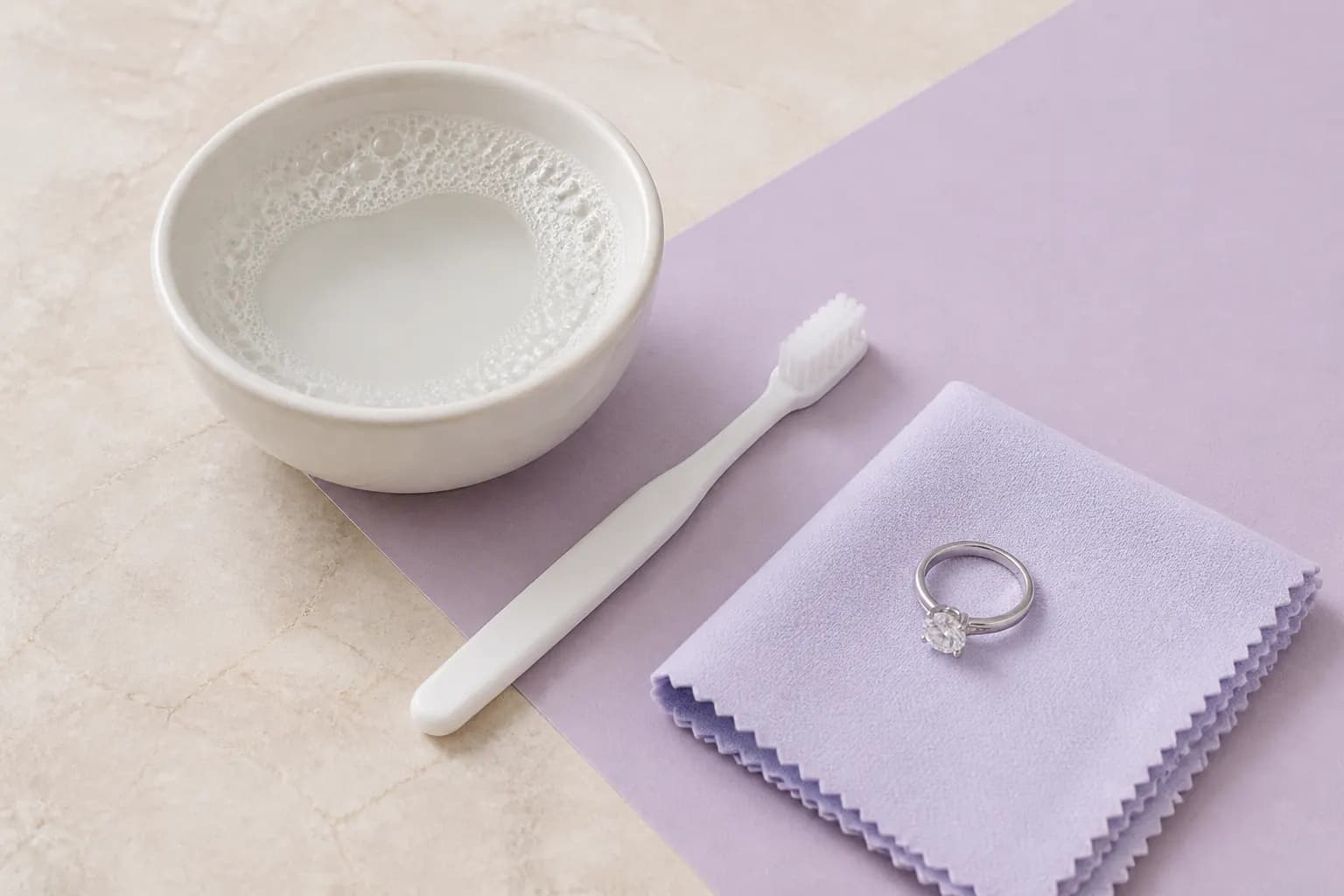
Fill a bowl — not the sink, where one slip meets an open drain — with warm water and a single drop of mild dish soap. Soak the ring for twenty to thirty minutes, then brush gently with a soft-bristled toothbrush, concentrating on the underside of the stone and the gallery openings beneath it, where grime actually collects. Rinse in a second bowl of clean water and dry with a lint-free cloth. That is the entire method, and it is essentially what jewelers recommend for home care.
It works because dish soap is a grease cutter, and the film killing your sparkle is grease: hand lotion, sunscreen, cooking oil, and skin oil, drawn to the pavilion of the stone where light is supposed to enter and return. A diamond that looks a size smaller and strangely gray is almost always just dirty from below. Weekly maintenance takes five minutes once the soak becomes habit.
What never to touch your ring with
Chlorine is the quiet killer. Bleach, chlorinated pool and hot-tub water, and many household cleaners attack the alloy metals in gold, leaving prongs pitted and brittle over repeated exposure — damage that shows up months later as a lost stone. Take the ring off before cleaning the bathroom and before getting into a pool, and never soak it in anything a bottle describes as a disinfectant.
The internet’s favorite hacks fail on the metal, not the stone. A diamond shrugs off toothpaste; the gold, platinum, and rhodium plating around it do not, and abrasive pastes leave fine scratches that dull polished surfaces permanently. Plain dish soap outperforms every one of these tricks with zero risk, which is why it is the only method worth keeping.
Chlorine and bleach
Pit and embrittle gold alloys and solder joints. Includes pools, hot tubs, and most bathroom cleaners.
Toothpaste and abrasives
Baking soda, powdered cleansers, and toothpaste scratch precious metal and strip rhodium plating.
Acetone and harsh solvents
Can damage fracture-filled or treated stones and attack some antique materials. Nail-polish remover counts.
Ultrasonic cleaners: sometimes great, sometimes ruinous
Ultrasonic machines clean by vibrating microscopic bubbles through the liquid, and for an untreated diamond, moissanite, or sapphire in a sound solitaire setting they are safe and effective — it is what many jewelers run behind the counter. A modest home unit used occasionally on a sturdy, recently inspected ring is a reasonable convenience.
The same vibration is exactly what you do not want in several common cases. Fracture-filled and heavily included stones can worsen or break, because the machine shakes the stone along its weakest lines. Treated stones may lose surface treatments. Pavé and micro-pavé settings hold dozens of tiny stones in tiny prongs, and ultrasonic cycles are a classic way to rattle them loose. If the ring has small side stones, visible inclusions, any disclosed treatment, or an antique setting, stay with the soap bowl and let a jeweler decide about machines.
How often, and the habits that keep it clean longer
A quick soap-and-brush wash every week or two keeps the stone consistently bright; lotion and skin oil dull a diamond within days of a cleaning, so waiting for a special occasion means the ring looks its worst most of the year. Set a recurring cue — Sunday evening, or whenever you charge your watch — rather than relying on noticing the dullness, which happens gradually enough to miss.
Better yet, reduce what reaches the ring. Put it on after lotion and sunscreen, not before. Take it off for the gym, where sweat, chalk, and knurled bars grind grime into every crevice and bend fine bands, and for dishwashing, which coats the pavilion in grease while knocking the setting against cookware. A designated ring dish in one consistent spot makes removal a habit instead of a risk.
Professional cleaning and prong checks
Every six to twelve months, have a jeweler clean and inspect the ring. They will steam and ultrasonically clean it under controlled conditions, then check the prongs, channels, and shank under magnification. Many jewelers do this free — routinely so at the store where the ring was purchased — and some warranties and insurance policies expect periodic inspection, so keep the receipts.
The inspection is the part you cannot replicate at home. A prong worn thin or lifted a fraction of a millimeter is invisible to you and obvious under a loupe, and re-tipping it is a small, cheap repair; the alternative is finding an empty setting and retracing a week of sidewalks. The same visit catches loosening pavé stones, thinning rhodium on white gold, and bent shanks from gym sessions the wearer forgot to mention.
Know your stone and metal before you scrub
Everything above assumes the robust stones that dominate engagement rings: diamond, lab-grown diamond, moissanite, and sapphire all tolerate soap, brushing, and — untreated and well set — ultrasonic cleaning. Other stones play by different rules. Emeralds are routinely oil-treated and should never meet an ultrasonic machine or solvents; pearls and opals are soft and porous, and want nothing more than a wipe with a damp cloth. If the ring mixes stone types, clean to the standard of its most delicate stone.
Metal matters too. White gold is usually rhodium-plated, and while soap and a soft brush are harmless, abrasives and constant harsh scrubbing thin the plating faster, bringing forward the day the warm tone underneath shows through. Platinum and unplated yellow or rose gold are more forgiving — they polish rather than strip — but all of them scratch, which is one more argument for the soft brush over anything stiffer.
Sources and references
For definitions, evidence, and further reading, continue with these specialist and first-party resources.
Quick answers
Frequently asked questions
Can I clean my engagement ring with toothpaste?
No. Toothpaste contains abrasives designed to scrub tooth enamel, and they are hard enough to scratch gold, platinum, and rhodium plating, permanently dulling the metal around the stone. It also leaves residue in the setting’s crevices. Warm water, one drop of mild dish soap, and a soft toothbrush clean better and risk nothing.
How often should I clean my engagement ring?
A quick at-home wash every week or two keeps the stone bright, since lotion and skin oils dull a diamond within days. Add a professional cleaning and prong inspection every six to twelve months — many jewelers offer it free — to catch loose stones, worn prongs, and thinning plating before anything is lost.
Is it safe to wear my ring in the shower?
Take it off. An occasional shower will not damage a diamond or gold, but soap and shampoo leave films that dull the stone within days, and a slippery ring over an open drain is a classic loss story. The habit costs sparkle and adds risk for no benefit; keep a ring dish outside the bathroom instead.