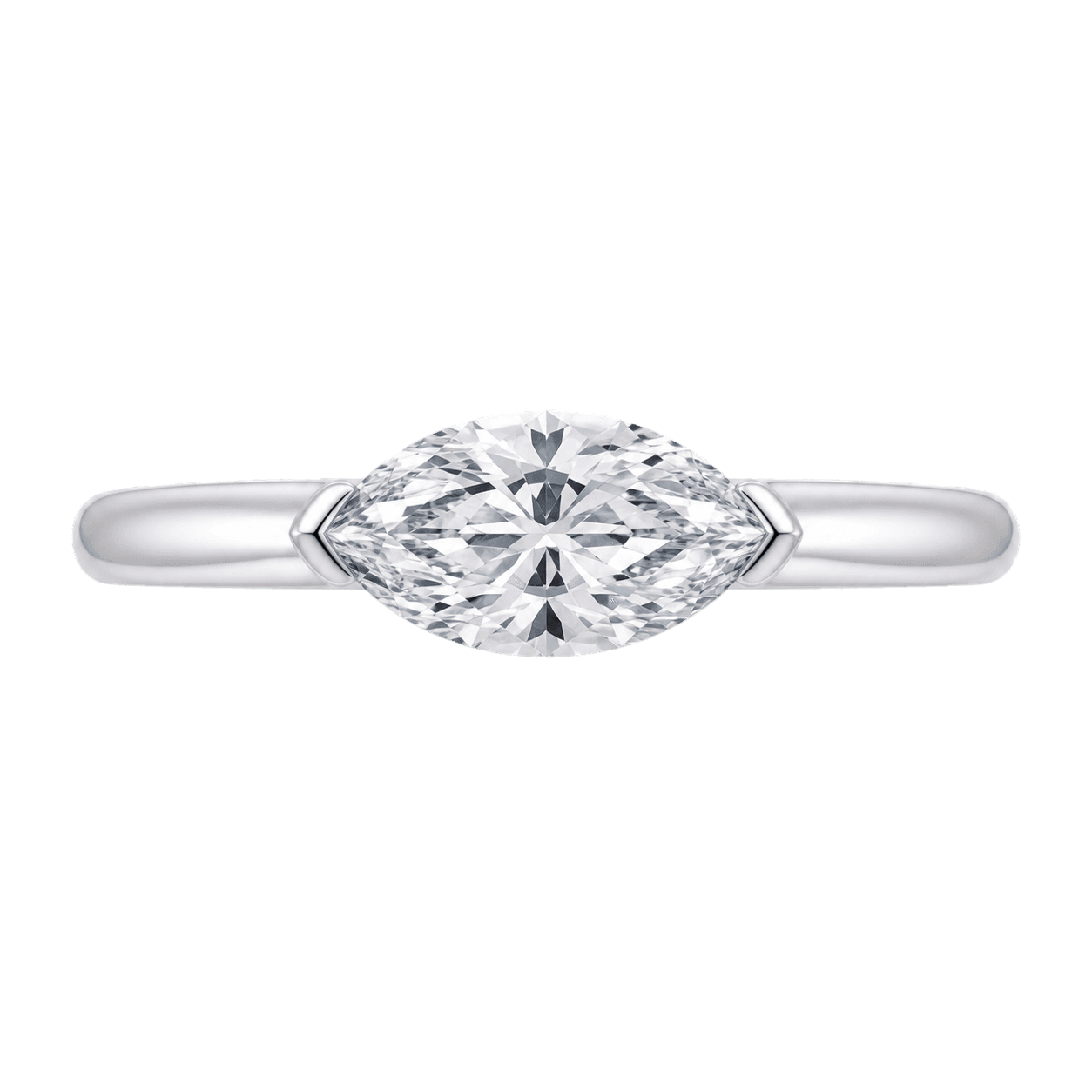
What the 4Cs are and where they came from
Cut, color, clarity, and carat weight are the four standardized measures of diamond quality. The Gemological Institute of America (GIA) created the framework in the mid-twentieth century — the term was coined by GIA founder Robert M. Shipley, and in 1953 GIA introduced the D-to-Z color scale and clarity scale that nearly every grading laboratory still uses. Before that, sellers described stones with unverifiable words like ‘blue white’ and ‘perfect.’
The 4Cs are a shared description, not a verdict. They let two people discuss the same stone without standing over it, and they let you compare offers from different sellers on equal terms. What they do not do is rank beauty: a diamond with three modest grades and one excellent cut routinely outshines a stone with better paper. The rest of this guide is about knowing which grades your eyes can actually see.
Cut: the C you can see from across the room
Cut is not shape — round and oval are shapes; cut grade describes how well a stone’s proportions, symmetry, and polish return light. A well-cut diamond looks bright and lively from every angle. A stone cut too deep or too shallow leaks light out the bottom and sides, so it reads dark or glassy no matter how high its color and clarity grades are. That is why cut outranks the other three Cs: it is the difference visible at conversation distance, while the others need close inspection.
Only round brilliants currently receive an overall GIA cut grade, from Excellent to Poor; for rounds, Excellent (or a vendor’s equivalent ‘Ideal’) is the one specification worth refusing to trade away. Fancy shapes — ovals, emeralds, pears — have no overall cut grade, so judge them with neutral video in more than one lighting condition, compare face-up millimeter dimensions, and be suspicious of stones priced well below their peers: buried weight and poor proportions are the usual reason.
Color: where the visible cutoff really sits
The scale runs from D (colorless) to Z (obviously tinted). D through F are graded colorless; G through J are near-colorless. Here is the honest part: adjacent grades are indistinguishable face-up, and once a stone is set, most people cannot separate an F from an H at all. Graders make the call with loose stones face-down against a white tray — conditions your partner’s hand will never reproduce. For most buyers in white metals, G to I is the value zone: it reads colorless on the hand at a meaningful discount to D-F.
Two things move the cutoff. Metal first: yellow and rose gold cast warmth into any stone, so a J or K reads as intentional and harmonious where it might look faintly warm in platinum. Shape second: step cuts like emerald and Asscher have large open facets that show body color more readily, and bigger stones show more color than small ones — in both cases, staying a grade or two higher is money well spent. Brilliant-cut patterns, by contrast, chop light into flashes that hide warmth.
Clarity: eye-clean is the finish line
Clarity grades — Flawless down through Included — describe inclusions as seen under 10x magnification, which is the problem: you will never look at this ring through a loupe again after purchase. The practical target is ‘eye-clean’: no inclusions visible to the naked eye at normal viewing distance. For round brilliants around a carat, that is often a VS2 or a well-chosen SI1, grades that cost dramatically less than the VVS tiers whose differences exist only under magnification.
Eye-clean is a property of the individual stone, not the grade, so verify it: inspect magnified video, then mentally shrink it to real size, and ask the seller to confirm in writing that the stone is eye-clean face-up. The inclusion plot on the report helps too — a small white feather near the girdle, where a prong can cover it, is a better SI1 than a dark crystal under the table. Step cuts and larger stones hide less, so budget for VS clarity there.
Carat: weight, not face-up size
A carat is one fifth of a gram — a unit of weight, not a diameter. Two one-carat diamonds can look clearly different sizes from above, because a deep-cut stone carries weight below the girdle where no one sees it. The face-up millimeter measurements on the grading report tell you how big the stone actually looks; the carat number mostly tells you what it will cost.
Prices also jump at the round numbers buyers search for — 0.50, 1.00, 1.50 — which cutters and sellers call magic sizes. A 0.90-carat stone is visually indistinguishable from a 1.00 on the hand and costs meaningfully less per carat; shopping just under the threshold is one of the few free lunches in diamond buying.
The trade-off order, and the paper that protects it
The 4Cs compete for the same dollars, so rank them before you shop. For most buyers the order is: lock in cut first, because it is the only C visible across a room; buy the cheapest clarity that is genuinely eye-clean; choose near-colorless color with your metal and shape in mind; then put whatever remains into carat. Run the order in reverse — chasing carat first — and you end up with the large, dull stones that fill clearance cases.
Whatever you choose, verify the issuer, report type, and number on the laboratory’s own website, then match the measurements, origin or growth-method disclosures, treatments, and any laser inscription to the stone. Report formats are not interchangeable: IGI commonly reports 4C grades for lab-grown diamonds, while GIA’s current colorless-to-near-colorless lab-grown service uses ‘Premium’ or ‘Standard’ overall assessments. A report describes the stone; it does not price it or replace looking at it.
Never trade: cut
Excellent cut on rounds, carefully judged proportions on fancy shapes. This is where the sparkle lives.
Verify by eye: clarity
Buy the lowest grade that is eye-clean for the specific stone — often VS2 or SI1 — and confirm it on video.
Relax with context: color and carat
Warm metals and brilliant shapes forgive lower color; buying just under magic carat sizes saves real money.
Sources and references
For definitions, evidence, and further reading, continue with these specialist and first-party resources.
Quick answers
Frequently asked questions
Which of the 4Cs is most important?
Cut, and it is not close. Cut controls how much light the diamond returns, which is what people actually see at normal distance. A well-cut stone with mid-range color and clarity outshines a poorly cut stone with better paper grades. Lock in the best cut available, then relax the other three Cs until the budget fits.
What is the best diamond color and clarity for the money?
For most buyers: near-colorless color, G to J, and the lowest clarity that is still eye-clean, often VS2 or SI1. Grades above that describe differences visible only under magnification. Warm metals and brilliant-cut shapes let you drop further down the color scale, while step cuts and larger stones justify a grade or two higher in both.
Do the 4Cs matter for lab-grown diamonds?
The 4C concepts still matter, but report formats are not identical. IGI commonly reports cut, color, clarity, and carat grades for lab-grown diamonds, while GIA’s current colorless-to-near-colorless lab-grown service uses an overall ‘Premium’ or ‘Standard’ assessment instead of natural-diamond grade nomenclature. In either case, prioritize cut and proportions, confirm the stone looks clean to the eye, and compare the actual stone—not just the labels.