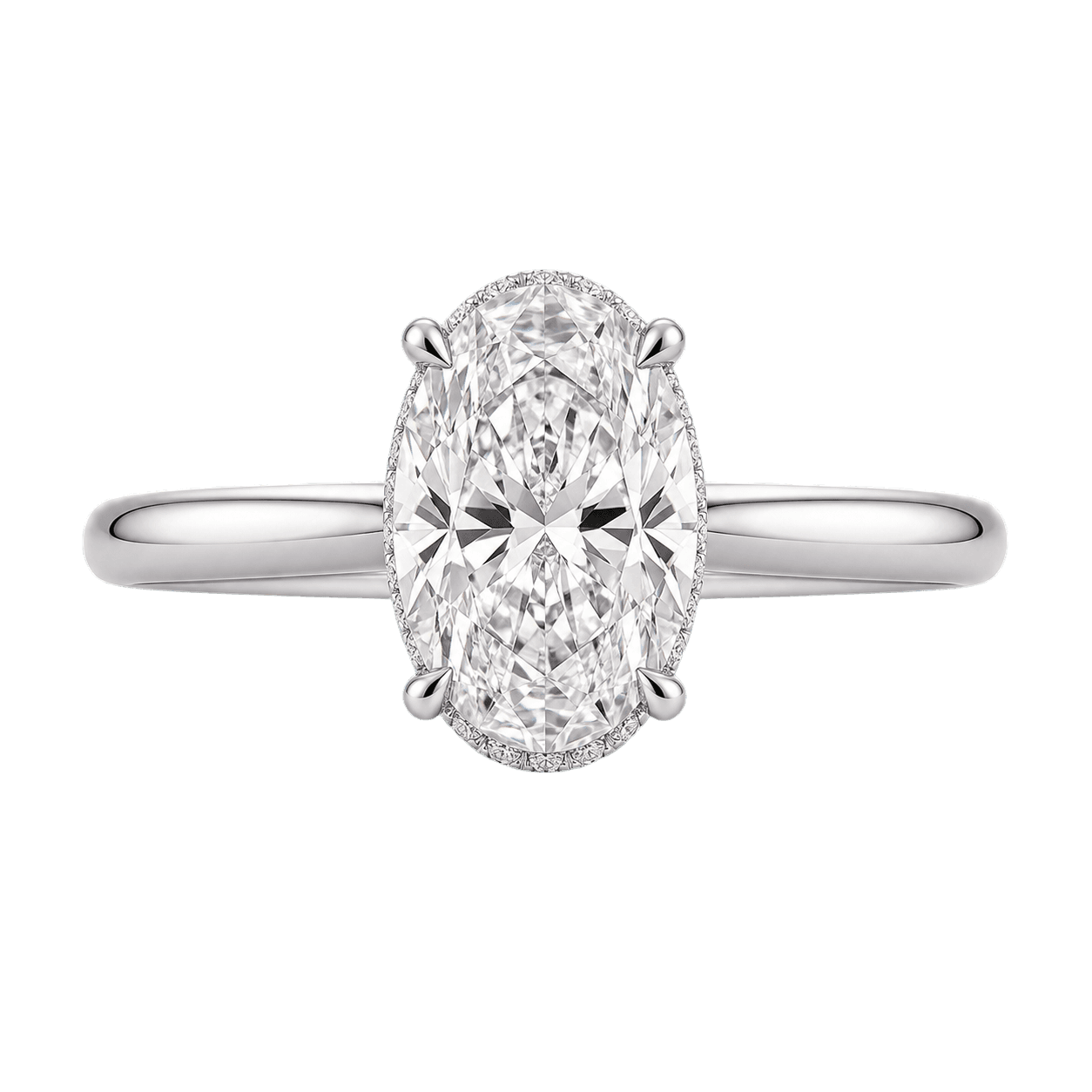
Start with color, then compare within it
The first split is simple: does your partner reach for silver-toned jewelry, warm gold, or blush rose tones? That answer eliminates half the decision immediately. Skin-tone rules you may read online are optional style opinions, not requirements; consistent personal preference is better evidence.
Once the color is settled, the real comparison begins, because two metals can share a color and behave differently on the hand. Platinum and white gold look nearly identical on day one but age, weigh, and cost differently.
Platinum vs. white gold: the comparison most buyers face
Platinum is naturally white. White gold is an alloy and is often rhodium-plated; that coating can wear and need renewal. Compare maintenance terms for the exact ring, rather than assuming either option is maintenance-free.
Karat, alloys, and what durable really means
Yellow and rose gold offer different warm tones. Karat describes gold content: 14k is approximately 58.3% gold and 18k is 75%. Color, hardness and skin compatibility also depend on the other metals and construction, so karat alone does not determine durability.
Compare the exact alloy, finished price and maintenance terms. No metal is wear-proof or guaranteed suitable for every skin sensitivity. Ask about alloy ingredients, prong checks, polishing and replating; do not assume a fixed service interval or cost.
Match the metal to their hands and habits
Look at what your partner already owns and wears repeatedly: the metal color of their favorite pieces, whether those pieces stay bright or develop wear, and whether they ever mention skin irritation. A drawer of yellow-gold jewelry answers the color question louder than any guide.
Sources and references
For definitions, evidence, and further reading, continue with these specialist and first-party resources.
Quick answers
Frequently asked questions
Is platinum better than white gold for an engagement ring?
Platinum is naturally white. White gold is an alloy and is often rhodium-plated; that coating can wear and need renewal. Compare maintenance terms for the exact ring, rather than assuming either option is maintenance-free. Compare the exact alloy, finished price and maintenance terms. No metal is wear-proof or guaranteed suitable for every skin sensitivity. Ask about alloy ingredients, prong checks, polishing and replating; do not assume a fixed service interval or cost.
Does white gold turn yellow over time?
Platinum is naturally white. White gold is an alloy and is often rhodium-plated; that coating can wear and need renewal. Compare maintenance terms for the exact ring, rather than assuming either option is maintenance-free.
Which metal is most durable for daily wear?
Yellow and rose gold offer different warm tones. Karat describes gold content: 14k is approximately 58.3% gold and 18k is 75%. Color, hardness and skin compatibility also depend on the other metals and construction, so karat alone does not determine durability. Compare the exact alloy, finished price and maintenance terms. No metal is wear-proof or guaranteed suitable for every skin sensitivity. Ask about alloy ingredients, prong checks, polishing and replating; do not assume a fixed service interval or cost.