Style, shape, and setting are different decisions
Shape describes the center stone’s outline. Setting describes how the stone is held and how the ring is constructed. Style is the combined impression created by the shape, setting, band, metal, proportions, and details.
That distinction matters because the same round diamond can feel spare in a plain solitaire, romantic in a halo, architectural in a bezel, or heirloom-like in an engraved setting.
Solitaire: focused and adaptable
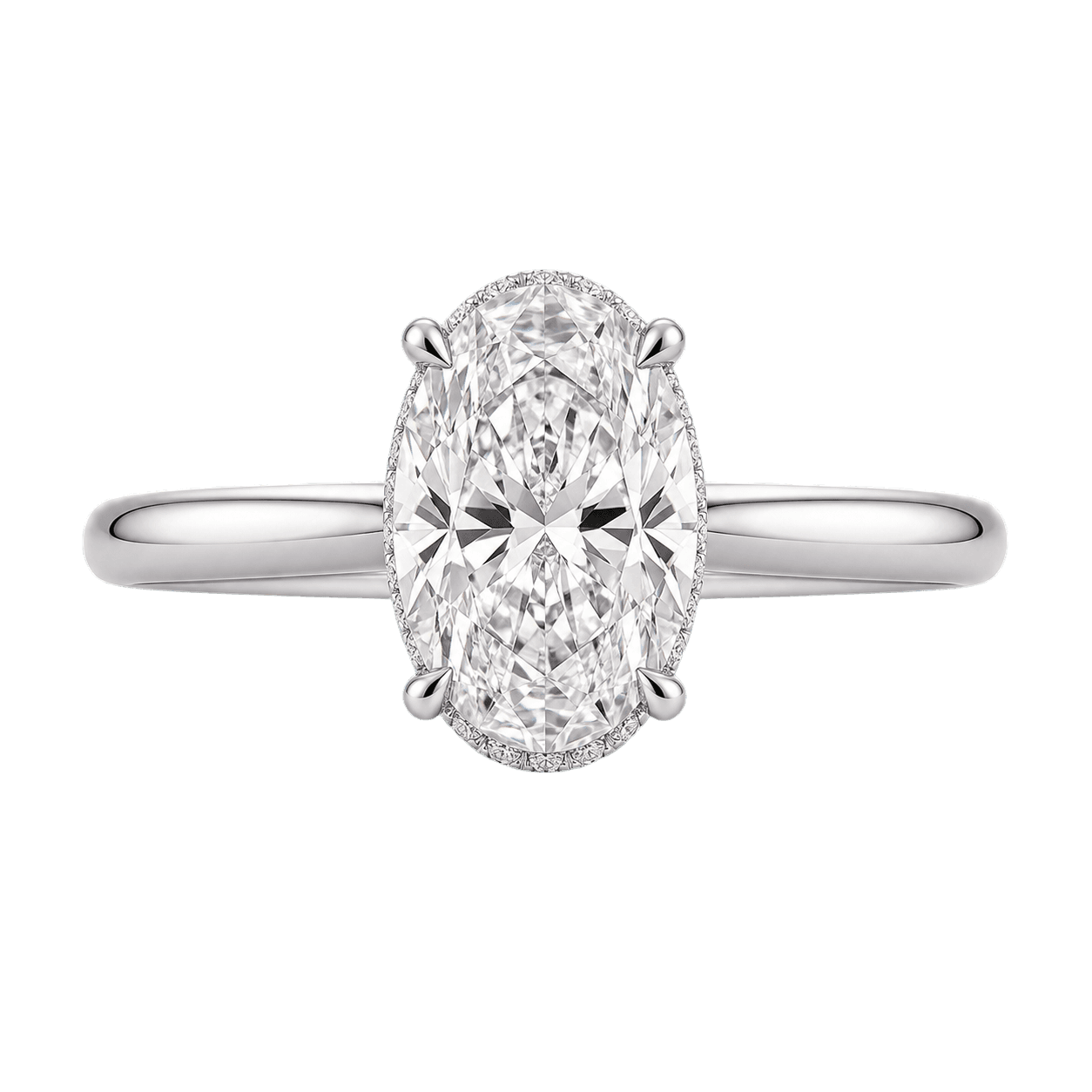
A solitaire centers one primary stone and keeps the surrounding design restrained. It can be classic, minimal, sculptural, or dramatic depending on the prongs, band width, profile, and stone shape.
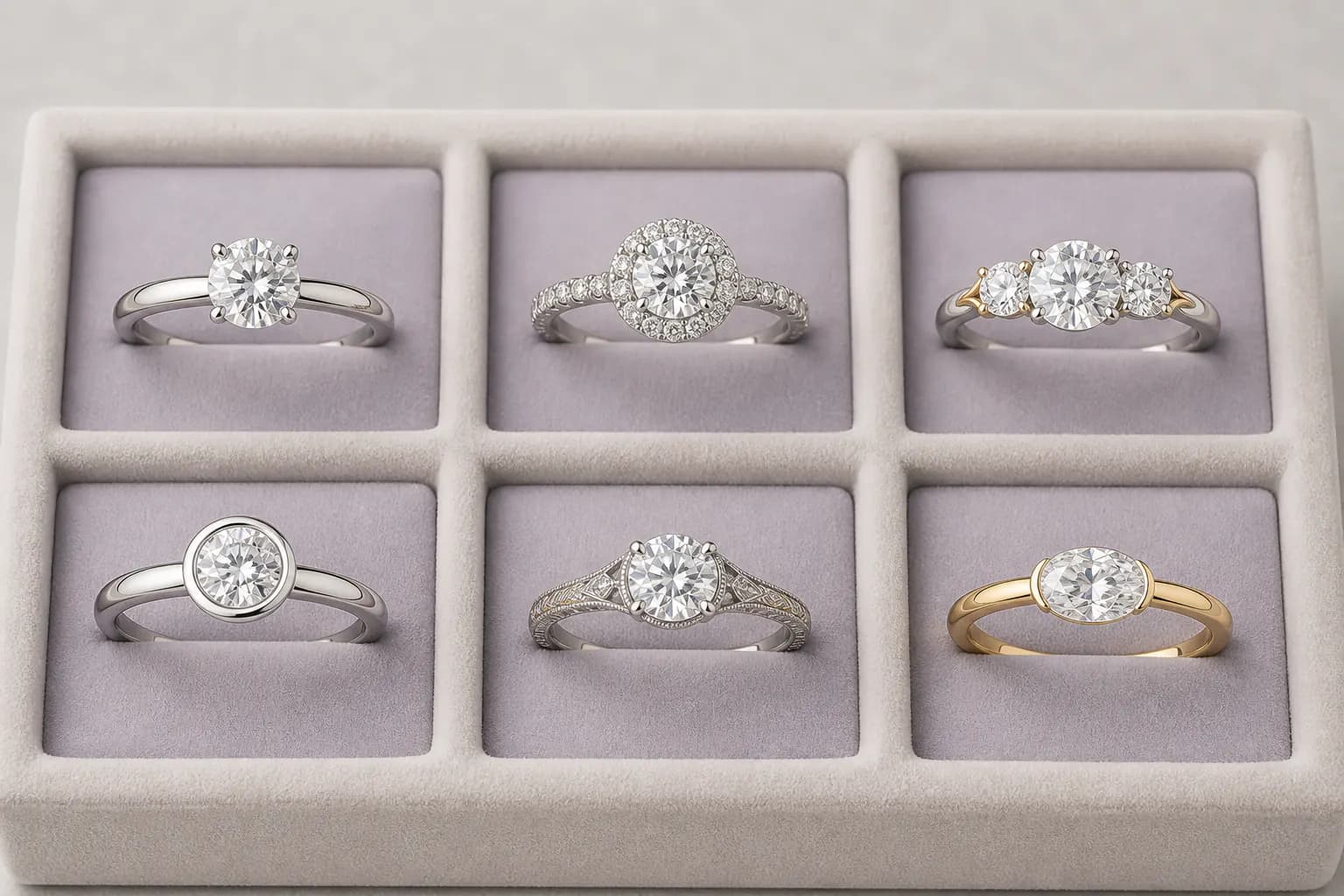
Solitaire settings suit people who repeat simple jewelry, prefer clean lines, or want the center stone to carry the design. Ask about profile height, prong protection, wedding-band fit, and whether the head can be serviced later.
Halo and hidden halo: sparkle in different places
A traditional halo surrounds the center stone with smaller stones and changes the face-up outline. A hidden halo sits below the center stone, so its detail appears more from the side than from directly above.
A visible halo can suit romantic, luminous, or detail-loving tastes. A hidden halo is a quieter route for someone who likes a clean top view with one private flourish. Inspect how the small stones are set and how easily the gallery can be cleaned.
Three-stone: balanced presence
A three-stone ring places two side stones around the center. Matching shapes feel composed and symmetrical; contrasting side stones can make the design more distinctive.
This style works well for someone drawn to balance, symbolism, or a fuller spread across the finger. Compare how the side stones affect wedding-band fit and whether their height protects or exposes the center stone’s edges.
Bezel and semi-bezel: clean framing
A bezel uses a rim of metal around some or all of the stone’s edge. It creates a defined outline and can reduce exposed edges, although security still depends on good construction and ongoing care.
Bezel settings often appeal to modern, graphic, or active tastes. They can visually change the apparent outline and may be harder to alter later, so review proportions and workmanship closely before committing.
Vintage-inspired: detail with a point of view
Milgrain, engraving, filigree, geometric galleries, and old-cut-inspired proportions can create an heirloom mood. Vintage-inspired does not describe one era or one construction method, so ask which details are decorative and which affect maintenance.
This direction suits someone who collects meaningful objects, wears intricate jewelry, or prefers character over perfect minimalism. Avoid assuming that every vintage-looking ring is delicate; the exact design and condition matter more than the label.
Sculptural and alternative: intentional asymmetry
East-west stones, offset arrangements, split bands, unusual orientations, and mixed shapes move the ring away from the expected centerline. The strongest designs still feel deliberate and wearable from every angle.
Look here when your partner favors independent designers, unusual accessories, or familiar objects with one surprising detail. Confirm resizing limits, wedding-band compatibility, and whether the silhouette catches during daily wear.
Choose a style by matching repeated clues
Translate visual clues into design language. Tailored clothing and crisp accessories may point toward geometric stones and clean settings. Fluid fabrics and delicate layering may suggest softer outlines and fine detail. Bold, art-led pieces may support a sculptural route.
These are starting hypotheses, not personality rules. Use the person’s actual jewelry choices to confirm or contradict them, then compare two coherent directions side by side.
Setting types at a glance
Every engagement ring setting type, in one table
When people search for “types of engagement rings”, they usually mean the setting: the construction that holds the stone and shapes the ring. The six style families above are combinations of these settings with a stone shape. Use the table to name what you like, then ask a jeweler about the specific row.
| Setting type | Style family | What it is | Best for | What to check |
|---|---|---|---|---|
| Prong solitaire (4 or 6 claws) | Solitaire | One center stone held by four or six metal claws above a plain band. The default engagement ring, and the reference every other setting is compared with. | Maximum light into the stone, easy cleaning, and the widest choice of wedding bands that sit flush. | Prong tips wear and need re-tipping every few years; taller heads catch on knitwear and gloves. Ask how high the stone sits. |
| Cathedral | Solitaire | Arches rise from the band to meet the head, like the vaulting the name comes from, so the stone appears lifted from the shank. | An elegant side profile and extra support for the head without adding side stones. | A taller profile and a gap under the arches; many cathedral rings need a contoured wedding band to sit flush. |
| Bezel | Bezel | A rim of metal wraps the entire edge of the stone instead of claws holding it at points. | Hands-on work, sport, gloves and low-maintenance wear; the smoothest, most snag-free construction. | Slightly less light reaches the stone and the rim can make it look marginally smaller; resizing is possible but less flexible. Inspect the rim for an even, polished edge. |
| Semi-bezel (half bezel) | Bezel | Metal wraps two opposite sides of the stone and leaves the others open. | A modern outline with more light and a lower profile than a full bezel, while still protecting the most exposed edges. | The open sides still need care with pointed shapes; check how securely the two rims grip. |
| Halo | Halo | A ring of small stones surrounds the center stone and changes its face-up outline. | A larger, brighter look from a given center stone, and romantic or detail-loving tastes. | Dozens of tiny prongs to maintain, a harder wedding-band fit, and cleaning under the halo. Ask whether the small stones are covered by the warranty. |
| Three-stone (trilogy) | Three-stone | Two side stones flank the center, matching or contrasting in shape. | More spread across the finger, symmetry, and past-present-future symbolism. | Side stones usually sit lower and need a contoured band; matching color and clarity across three stones matters more than most listings admit. |
| Pavé band | Any | Tiny stones set into the band itself, held by minute beads of metal so the surface looks paved with sparkle. | Continuous brightness along the band with any center setting. | The most maintenance-prone construction in jewelry: small stones can loosen, and pavé that runs all the way round limits resizing. Prefer pavé that stops before the palm side. |
| Channel set | Any | Stones sit in a metal channel between two walls with no prongs on the surface. | Durable sparkle with smooth edges; a good fit for active hands that still want stones. | Channels trap residue and stones can rattle if the walls wear; resizing is limited near the channel. |
| Tension and tension-style | Sculptural | The stone appears to float, held by the pressure of the band (true tension) or by a hidden bezel that mimics the look (tension-style). | A modern, architectural look with light entering from every side. | True tension rings cannot be resized and are unforgiving of size changes; ask which construction you are actually buying. |
| Cluster | Vintage-inspired | Several small stones are arranged to read as one larger form, from a flower to a geometric block. | Face-up size on a smaller budget and an antique or bohemian character. | Many prongs to check, more crevices to clean, and a less durable feel than one well-set center stone. |
| East-west | Sculptural | An elongated stone such as an oval, emerald or marquise is set horizontally across the finger instead of along it. | A distinctive, low profile that reads modern and hugs the hand. | Wedding bands rarely sit flush without an open or contoured design; confirm the stone's tips are protected. |
| Toi et moi (two-stone) | Sculptural | Two stones sit side by side, often in different shapes or colors, on a band that curves to hold both. | Romantic symbolism and a deliberately asymmetric look. | The two stones must sit at a comfortable, matched height, and the curved band complicates stacking. |
| Split shank | Any | The band divides into two strands as it approaches the head, framing the stone with negative space. | Visual lift and room for pavé or detail without a halo. | The gap collects dirt and can catch on fabric; check that the split is finished smoothly on the underside. |
| Vintage, milgrain and filigree | Vintage-inspired | Beaded edges, engraving and openwork galleries applied to any of the settings above to give an heirloom mood. | Character, texture and a ring that looks inherited rather than bought. | Fine detail wears down with polishing and repairs; ask which elements are decorative and which affect maintenance. |
Solitaire or halo? Three questions that settle it
- Do they wear detail or clean lines?
Repeat jewelry tells you more than any quiz answer. Layered, textured pieces point to a halo or pavé; a single plain chain worn daily points to a solitaire or bezel.
- Would they rather have a bigger look or a bigger stone?
A halo makes a given center stone read larger for less money than buying the next carat step; a solitaire spends the same budget on the stone itself, which holds its value better.
- Who is going to maintain it?
A halo carries dozens of tiny prongs and yearly inspections. If that sounds like a chore, a hidden halo or a bezel delivers detail with far less upkeep.
Quick answers
Frequently asked questions
What engagement ring style is most timeless?
No style is immune to changing taste, but restrained proportions, durable construction, and details that genuinely match the wearer tend to age better than a choice made only because it is trending.
Is a hidden halo still a halo?
Yes, but it sits below the center stone rather than surrounding its face-up outline. It adds side-view sparkle while keeping the top view cleaner than a traditional halo.
Can a solitaire feel modern rather than traditional?
Yes. Band width, stone orientation, prong design, profile, metal, and proportions can make a solitaire feel minimal, architectural, soft, or classic.