Start with clues, not a catalog
Before comparing diamonds, look at what your partner already chooses. Their everyday jewelry, clothing, saved interiors, accessories, and comments about other rings can reveal more than a generic trend list. The goal is not to label their personality. It is to notice repeatable visual preferences.
Pay attention to contrasts: delicate or substantial, minimal or detailed, symmetrical or organic, warm or cool metal, quiet or high-sparkle. Three consistent clues are more useful than one isolated screenshot.
Jewelry they repeat
Note the metal color, scale, texture, and whether their favorite pieces sit close to the body or make a statement.
What they save
Look for recurring shapes and moods across rings, fashion, furniture, or art rather than copying one image literally.
What they reject
A clear hard no—such as a tall setting, yellow gold, or a halo—can prevent a costly wrong turn.
Design for the life they actually live
An engagement ring is an everyday object. Hands-on work, frequent glove use, exercise, caregiving, gardening, or a habit of catching jewelry on clothing may make a lower profile and protected edges more comfortable. Someone who happily removes fine jewelry for activities may have more flexibility.
Ask how much maintenance feels realistic. Pavé, fine prongs, and intricate galleries can be beautiful, but they deserve regular checks and careful wear. A simpler setting is not automatically more secure; construction quality, stone shape, and workmanship still matter.
Separate shape from setting
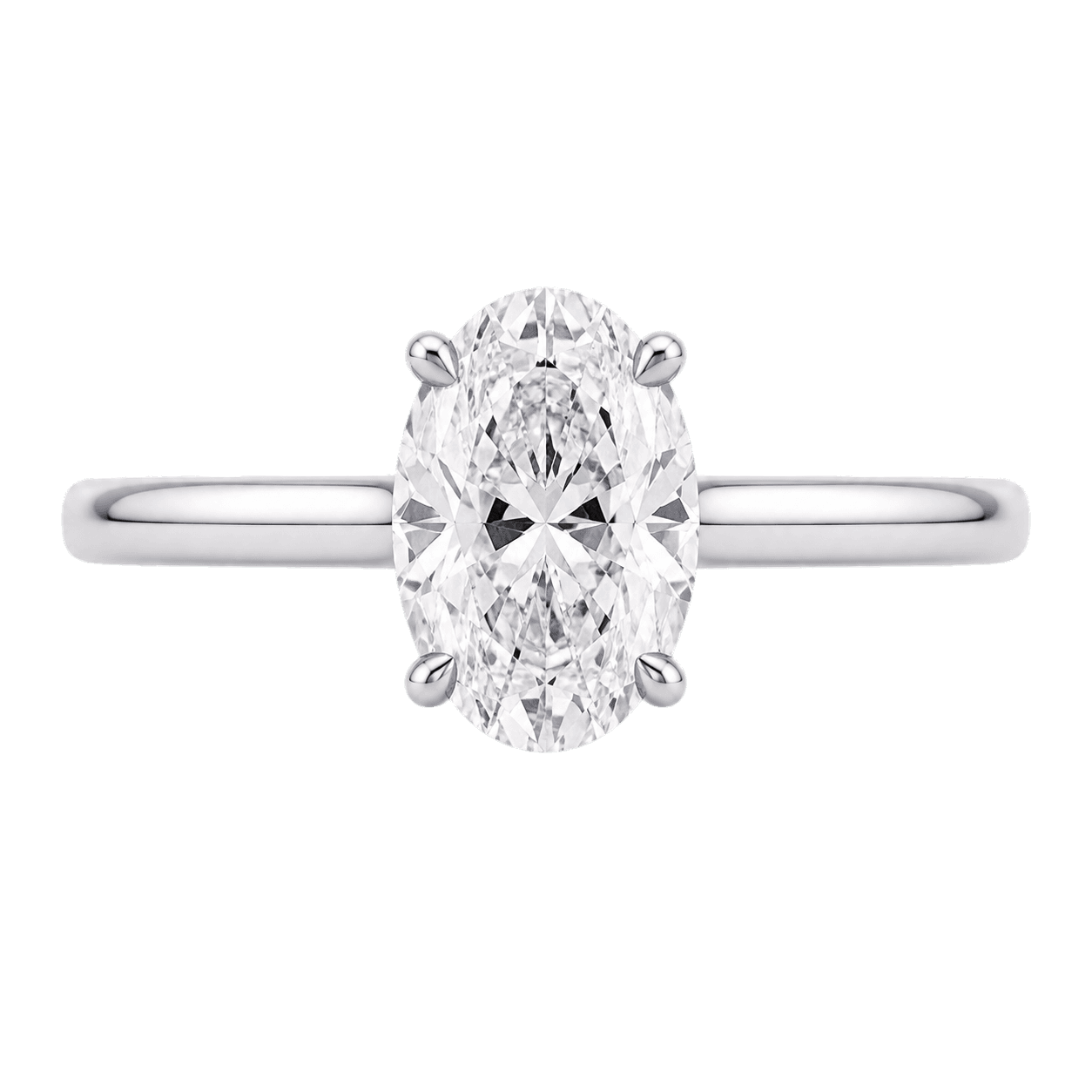
Diamond shape is the face-up outline—round, oval, princess, emerald, cushion, pear, radiant, marquise, Asscher, and heart are common examples. The setting is the structure that holds the center stone and shapes the rest of the ring. A person can love an oval in a clean solitaire and dislike the same oval in an ornate halo.
Choose the overall silhouette first, then decide how much detail belongs around it. If you are uncertain, compare two deliberately different routes rather than twenty nearly identical rings. For example: an oval hidden halo versus an emerald-cut cathedral solitaire.
Use their existing jewelry to choose a metal
Frequent yellow-gold wear is a useful signal, as is a consistent preference for silver-toned jewelry. Mixed-metal wear gives you more freedom. Skin tone rules are optional styling ideas, not requirements; the metal your partner already reaches for is stronger evidence.
Also compare the practical trade-offs of the exact alloy and construction. Platinum, white gold, yellow gold, and rose gold wear and maintain differently. Ask the jeweler about alloy composition, plating, resizing, and care instead of relying on color alone.
Set a finished-ring budget before optimizing the diamond
Set two numbers: the maximum ring price before tax, and an all-in amount that also leaves room for tax, shipping, resizing, appraisal, and insurance. There is no responsible salary formula that can decide either number for you.
Then choose what the budget should do: maximize visual presence, prioritize natural origin, protect a distinctive setting, or balance everything. That priority turns vague browsing into useful trade-offs.
Handle ring size without turning it into a risky guess
If the proposal is a surprise, borrow a ring worn on the correct finger only with care, ask someone trusted who can keep it confidential, or choose a jeweler with a clear resizing policy. Finger size varies by hand, temperature, band width, and time of day, so an old measurement is not a guarantee.
Before purchase, confirm whether the exact design can be resized and by how much. Full-eternity bands, tension settings, and some intricate designs may have limited resizing options.
Build a brief, then compare a short list
Write one sentence that defines the direction: for example, ‘a low-profile oval in platinum with a clean band and one hidden detail.’ Add the finished budget, preferred diamond route, and hard no’s. This becomes the standard for every retailer and quote.
A focused shortlist makes differences visible. Compare proportions, profile height, prong placement, return policy, warranty, resizing, grading documentation, and total price. If a ring no longer matches the brief, remove it—even if it looked impressive in isolation.
Quick answers
Frequently asked questions
How do I find out what engagement ring my partner wants?
Look for repeated clues in the jewelry they wear, images they save, and opinions they volunteer. Ask a trusted friend if appropriate, and record clear hard no’s. A pattern across several clues is more reliable than copying one ring photo.
Should an engagement ring be a complete surprise?
That depends on your relationship. The timing can be a surprise even when the style, budget, or ring size is discussed together. If uncertainty is high, choose together or use a jeweler with a strong exchange and resizing policy.
What if I know nothing about diamonds?
Begin with style, lifestyle, and budget. Those choices narrow the useful shapes, settings, metals, and diamond routes before technical specifications become necessary.