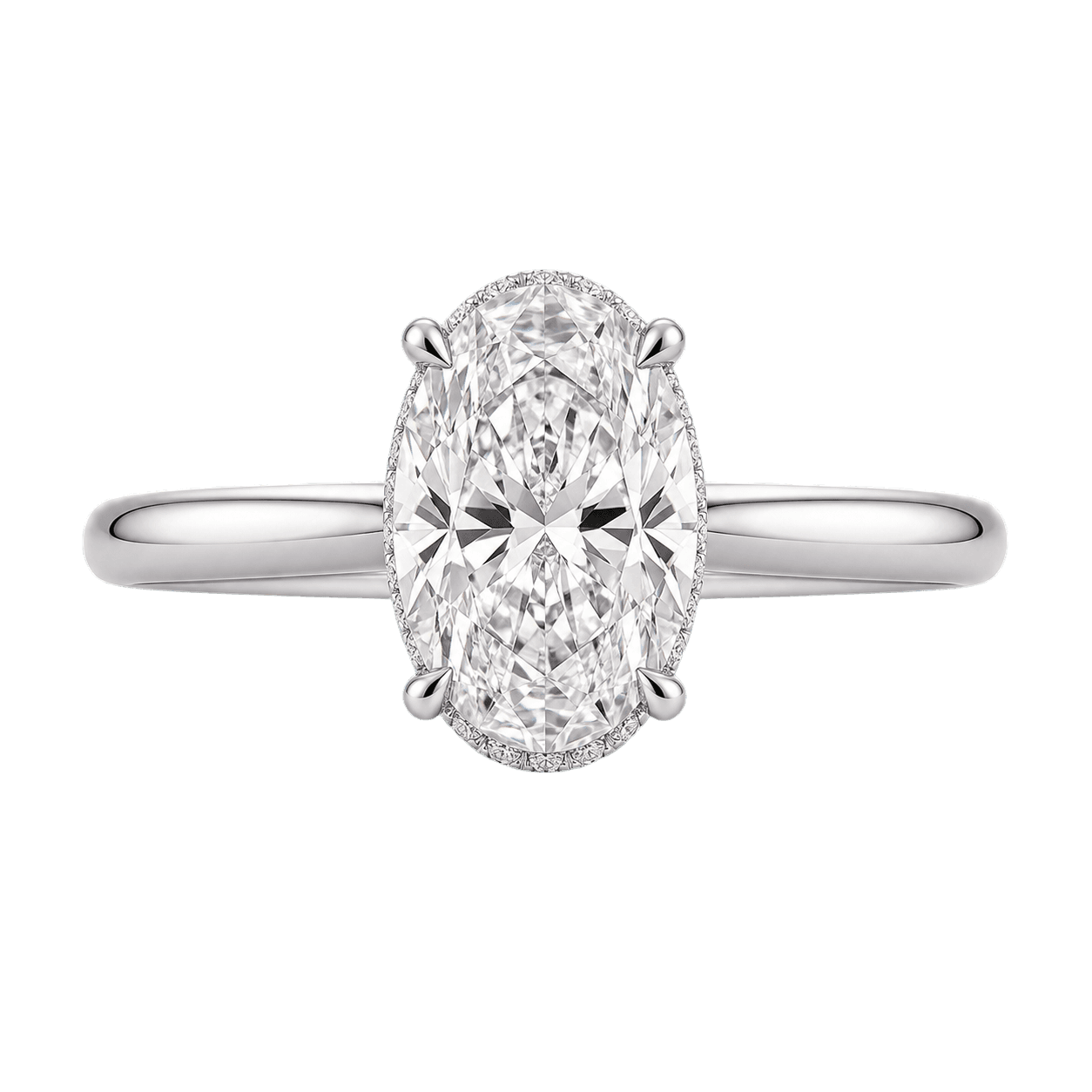
Define what active means for this person
‘Active’ might mean clinical gloves, tools, lifting, childcare, gardening, climbing, frequent travel, or simply disliking jewelry that catches on clothing. Those routines create different design needs.
List the situations in which the ring will stay on, come off, or be replaced with a simple band. A realistic wear plan is more useful than searching for a ring marketed as universally durable.
Compare profile height from the side
A lower-profile setting keeps the center stone closer to the finger and may reduce snagging. A higher setting can allow a straight wedding band to sit flush and can expose more of the stone from the side.
Request side-view photos and the ring’s approximate height. Check how the basket, gallery, and prongs meet the band. ‘Low profile’ is a relative description, so compare measurements when possible.
Protect vulnerable edges without assuming guarantees
Bezels, partial bezels, rails, and well-placed prongs can cover or support exposed edges. Pear, marquise, and heart shapes need thoughtful protection at their tips, while a princess cut’s sharp corners also deserve purpose-built coverage. Cut corners on emerald, radiant, and Asscher shapes affect prong placement too.
More metal coverage can change the visual outline and make future service more specialized. Ask how the exact setting is constructed and repaired rather than assuming a category name proves security.
Choose surface detail that matches maintenance habits
Pavé bands and intricate galleries create light and texture but add small components that benefit from inspection. Smooth bands and restrained settings may be easier to clean and monitor, though every ring still needs care.
If the wearer is unlikely to remove the ring for rough tasks or schedule checks, simplify the design before compromising the style completely. One strong center detail can preserve character without covering every surface.
Review metal, band width, and sizing together
Durability is not captured by metal color. Alloy, thickness, construction, finish, and the wearer’s activities all affect how a ring changes over time. Very fine bands may feel delicate; very wide bands can fit more tightly and change comfort.
Ask the jeweler how the chosen metal scratches, wears, is refinished, and is resized. Confirm whether the ring can tolerate the expected service without erasing intentional texture or detail.
Make a wear and storage plan
Even a practical engagement ring should come off for activities that expose it to impact, crushing, chemicals, or loss. Decide where it will be stored at home and what happens during travel, workouts, or work shifts.
Use a secure ring box or designated storage rather than a pocket, sink ledge, or locker shelf. Insurance, documentation, and periodic professional inspection can help manage financial and maintenance risk, but they do not prevent damage.
Sources and references
For definitions, evidence, and further reading, continue with these specialist and first-party resources.
Quick answers
Frequently asked questions
What engagement ring setting is best for an active lifestyle?
There is no single best setting. Lower profiles, protected edges, restrained surface detail, and sound construction can help, but the right choice depends on the stone shape, work, hobbies, and willingness to remove the ring.
Is a bezel setting secure?
A well-made bezel can protect more of a stone’s edge than exposed prongs, but it is not damage-proof. Construction quality, metal wear, impacts, and maintenance still matter.
Can I wear an engagement ring while exercising?
Removing fine jewelry is the safer default for lifting, contact sports, climbing, swimming, and activities with impact, pressure, chemicals, or loss risk. Store it securely rather than carrying it loose.