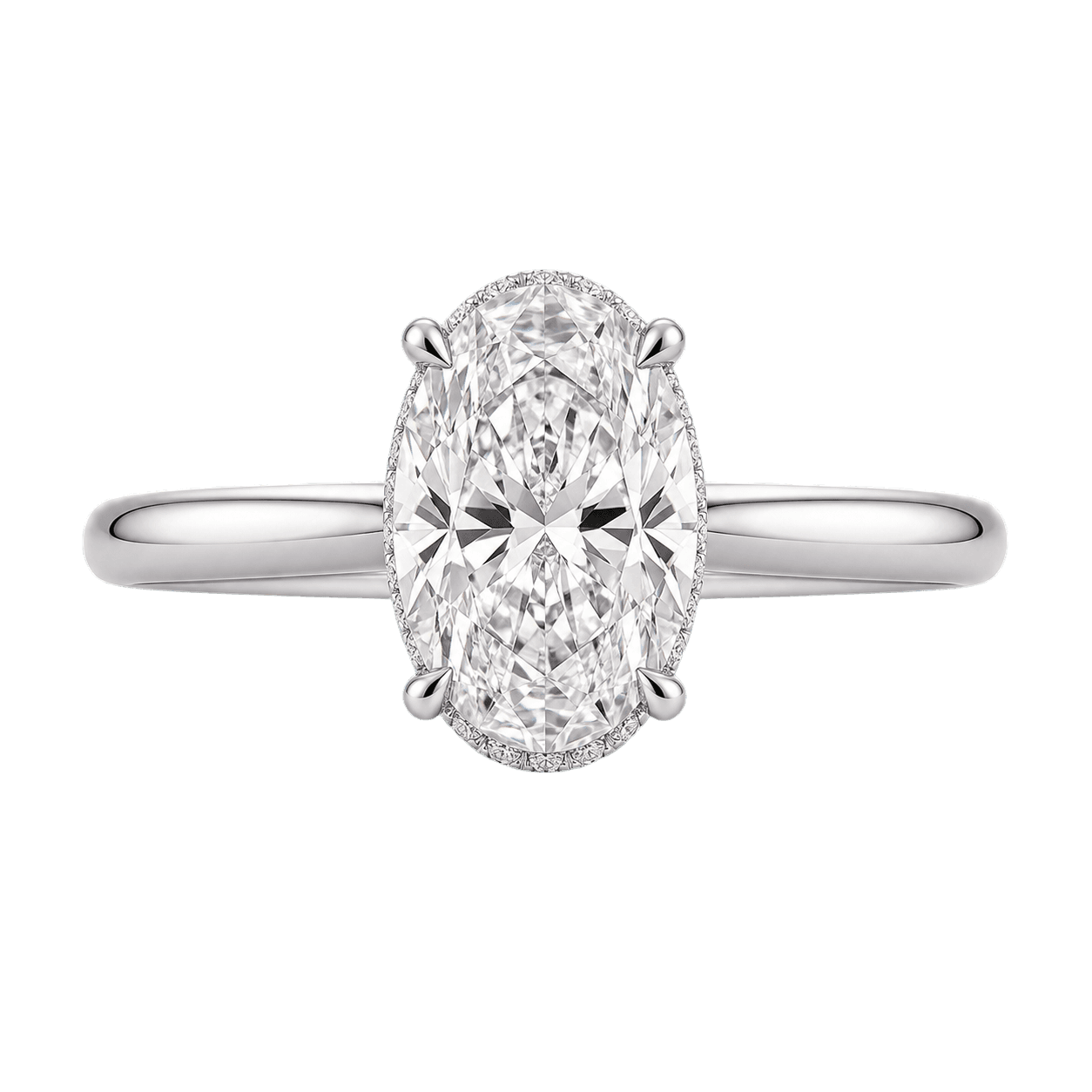
Both routes are diamonds; their origins differ
Natural diamonds form through geological processes and are mined. Laboratory-grown diamonds are produced using HPHT or CVD methods. According to GIA, they have essentially the same chemical, physical, and optical properties as natural diamonds.
Lab-grown is not the same as a simulant such as cubic zirconia or moissanite. Reliable origin identification requires appropriate testing and disclosure, not a quick visual judgment.
Compare individual stones, not origin stereotypes
Either route can include well- or poorly executed stones. Shape, proportions, facet pattern, color, clarity characteristics, fluorescence, finish, and the setting all affect the finished appearance.
Ask for independent documentation and clear video, then inspect finalists under more than one lighting condition. A report describes the stone; it does not replace looking at it.
Decide what you want the budget to prioritize
Lab-grown diamonds commonly allow more flexibility in size or specifications at a given purchase budget. A natural diamond route may matter more to someone who values geological origin, rarity, or a particular tradition.
Compare complete rings at the same total spend. A lower center-stone price can leave room for a more distinctive setting, stronger construction, insurance, or money kept for another goal. More carat weight is only useful if it supports the desired design.
Treat resale claims cautiously
An engagement ring is usually a retail purchase, not a predictable investment. Future resale depends on market conditions, brand, stone, documentation, condition, buyer access, and selling costs. Do not rely on a salesperson’s verbal forecast for either route.
If future value or upgrade flexibility matters, ask for the written buyback, trade-in, and upgrade terms before purchase. Compare what is guaranteed, what is discretionary, and whether the policy applies to the exact stone and setting.
Ask specific sourcing questions
Broad environmental or ethical claims can hide important differences among producers and supply chains. Ask what is known about origin, energy, labor, traceability, recycled metal, certifications, and the boundaries of each claim.
The right route is personal. Some couples prioritize natural origin; some prioritize size or budget efficiency; some care most about traceable production; others compare both. A useful recommendation keeps that preference explicit instead of deciding it for you.
Questions to ask before buying either route
Confirm whether the diamond is natural or laboratory-grown, which laboratory issued its report, whether treatments are disclosed, and whether the report number matches the stone. Review the return, resizing, warranty, maintenance, and upgrade policies in writing.
Compare the same design brief across both routes: shape, face-up dimensions, appearance, setting, metal, total price, and aftercare. This makes the trade-off visible without turning origin into the only decision.
Sources and references
For definitions, evidence, and further reading, continue with these specialist and first-party resources.
Quick answers
Frequently asked questions
Are lab-grown diamonds real diamonds?
Yes. Laboratory-grown and natural diamonds have essentially the same chemical, physical, and optical properties. They differ in origin and can be identified with specialized testing.
Can you tell a lab-grown diamond by looking at it?
Not reliably. GIA says traditional observation and older-style diamond detectors cannot reliably separate the two; professional laboratory testing uses specialized instruments.
Is a natural or lab-grown diamond better?
Neither is universally better. Decide whether origin, budget flexibility, size, sourcing information, market considerations, or tradition carries the most weight for you, then compare individual stones and policies.