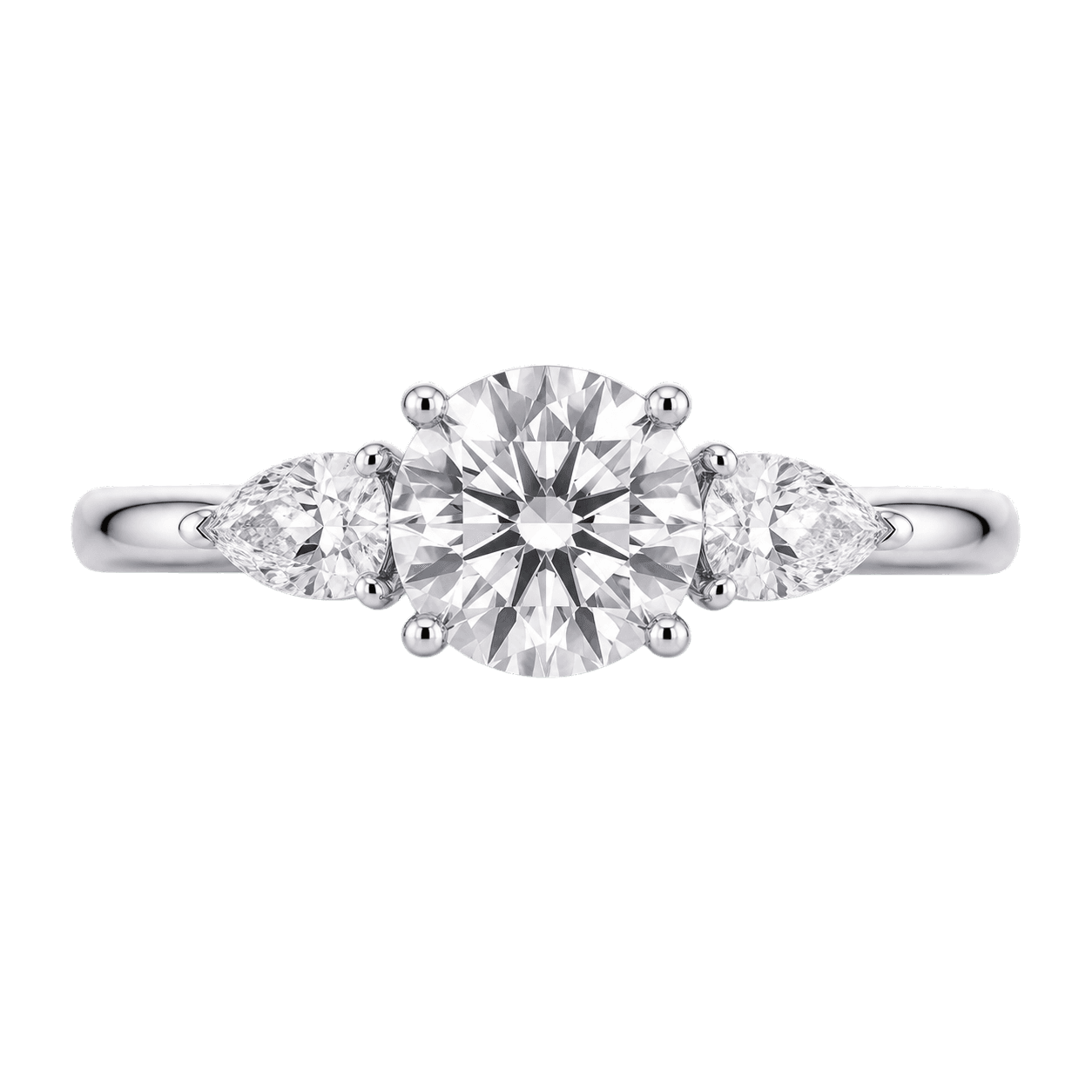
What moissanite is, and what it is not
Moissanite is silicon carbide, a lab-created crystal grown for jewelry. It is not a diamond and not an imitation trying to hide: it is a different material with its own optical character. That also makes it different from a lab-grown diamond, which is chemically identical to a mined diamond.
The distinction matters when you shop. Sellers are required to describe stones accurately, so a listing should always say moissanite, lab-grown diamond, or natural diamond in plain words. If a listing is vague about which of the three you are buying, treat that as a reason to leave.
Natural diamond
Carbon crystal formed underground. Graded by the 4Cs, priced highest, chosen for tradition and rarity.
Lab-grown diamond
The same carbon crystal grown in a reactor. Identical appearance and hardness to natural, at a lower price.
Moissanite
Silicon carbide. A different stone with more colorful fire, near-diamond hardness, and a far lower price.
Sparkle: brighter is not the same as identical
Moissanite bends light more strongly than diamond, so it throws more colored flashes, especially in sunlight and larger sizes. Some people love that extra rainbow fire; others find it reads as noticeably different from the whiter sparkle of a diamond. Neither reaction is wrong, but the difference is real and grows with stone size.
In smaller stones and lower light the two are hard to tell apart across a table. If the wearer has strong feelings about how a stone should sparkle, look at both materials side by side in daylight before deciding, rather than relying on photos or videos.
Durability for a ring worn every day
Moissanite sits just below diamond in hardness, comfortably above sapphire, and well above everyday hazards like dust and countertops. For practical purposes both stones handle daily wear for decades; the setting, prongs, and maintenance habits will fail long before either stone does.
Moissanite does not fade, cloud, or yellow with age. Like any stone, it picks up skin oils and lotion films that dull the surface until it is cleaned, and its extra fire makes the difference between clean and grubby slightly more visible.
Price: the order-of-magnitude difference
A moissanite center stone typically costs a small fraction of a comparable natural diamond and far less than a lab-grown diamond as well. That gap is large enough to change the whole plan: the same finished budget can move to a heavier setting, a larger stone, or simply stay unspent.
Be careful comparing sizes. Moissanite is usually sold by millimeter dimensions rather than carats because it weighs less than diamond at the same size. Compare stones by face-up millimeters, not by carat labels, and compare finished-ring totals rather than stone prices alone.
Meaning, resale, and the conversations that matter
Diamonds carry tradition and hold some resale and heirloom value; moissanite has effectively no resale market and no pretension to one. If those things matter to the wearer, that is a legitimate reason to choose a diamond, and no spreadsheet argument changes it.
What decides more engagements than any gem property: whether the wearer knows what the stone is. Choosing moissanite together, openly, is a budget decision a couple makes. Presenting moissanite as a diamond is a different thing entirely, and it tends to surface at an appraisal or insurance visit.
A short path to the right answer for you two
Start from the wearer, not the material: how much sparkle they like, whether tradition matters to them, and what the finished budget really is. If maximum size per dollar and colorful fire rank high, moissanite is a strong, honest choice. If heritage, rarity, or a classic diamond identity rank high, buy the diamond that fits the budget.
Whichever stone you choose, the rest of the decision is unchanged: shape, setting, metal, and construction quality still determine how the ring looks and lasts. Build one brief, then apply it to either material.
Sources and references
For definitions, evidence, and further reading, continue with these specialist and first-party resources.
Quick answers
Frequently asked questions
Can people tell moissanite from a diamond?
Across a dinner table, usually not. Up close and in bright light, larger moissanite shows more colorful fire than a diamond, and a jeweler can identify it instantly with a tester. Assume anyone with trained eyes or equipment can tell, and choose the stone honestly rather than hoping it passes.
Does moissanite get cloudy over time?
No. Moissanite is stable and does not degrade, fade, or yellow. Any dullness comes from lotion, soap, and skin-oil films on the surface, which routine cleaning removes completely — the same maintenance a diamond needs.
Is moissanite a bad choice for an engagement ring?
It is a legitimate choice when both partners want it. It offers near-diamond durability and more fire at a far lower price, at the cost of resale value and diamond tradition. The rings that cause regret are the ones where the material was a secret or a surprise, not the ones where it was a shared decision.