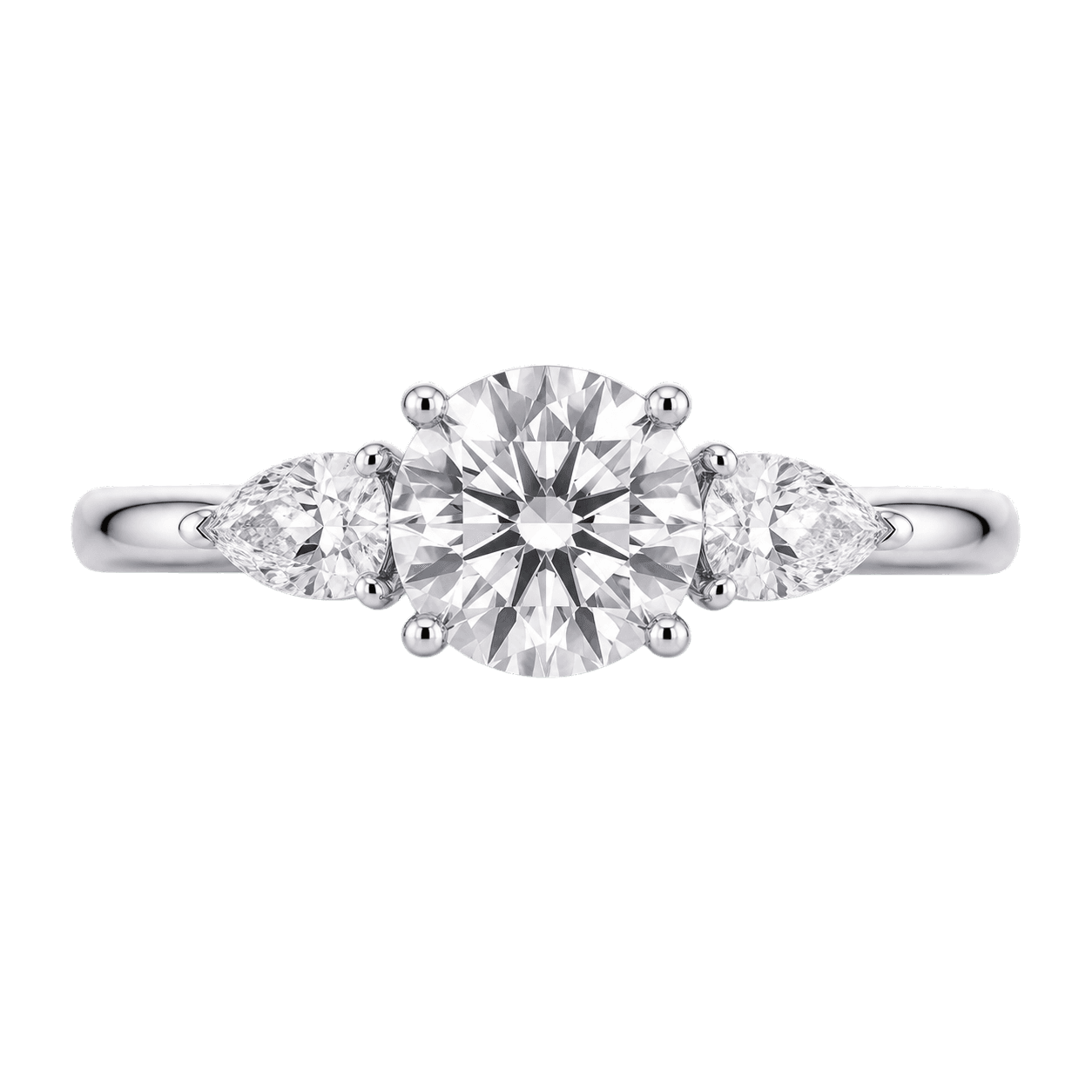
Why proposing first and choosing later works
A surprise ring bets thousands on guesses about style, size, and stone that the wearer could simply answer. Proposing without a ring keeps the surprise where it belongs — the question, the timing, the words — and removes the risk of a wrong ring that then needs an awkward exchange conversation.
It also makes budget honesty easier. Talking about money after an accepted proposal is a planning conversation between partners; guessing at an acceptable budget before one is pressure. Many couples find the ring they choose together fits both the hand and the finances better.
Make the moment unmistakable
Without a ring box, the proposal has to carry itself. Ask the actual question, in words: a clear ‘will you marry me?’ leaves no doubt about what is happening. Vague speeches without the question can genuinely confuse the person you are asking.
Say one sentence about the ring plan in the same breath: that you want to choose it together, and roughly when. That single sentence converts ‘no ring’ from an omission into a plan, which is exactly how it will be retold later.
What to hold in your hands instead
Something physical helps the moment land and gives the story an object. It does not need to be jewelry, and it should not be a cheap ring pretending to be the real one unless you both know its role.
Choose a placeholder that matches your partner: sentimental, practical, or playful. The placeholder is a prop for one evening; do not spend real ring budget on it.
A placeholder ring
An inexpensive band or a candy ring, clearly framed as a stand-in until you choose the real one together.
A family heirloom
A borrowed or inherited ring can carry the moment; decide together later whether it becomes the ring or a starting point.
A memento or letter
A ticket from your first date, a photograph, or a written promise — small objects that become part of the story.
Handle the ‘show me the ring’ question
The first thing many people ask a newly engaged couple is to see the ring. Agree on the one-line answer before you tell anyone: ‘we are choosing it together, it is being made, here is the plan.’ Said plainly and once, it ends the topic.
Anyone whose enthusiasm depends on the ring rather than the engagement is answering a different question than the one you asked. Most people find choosing together modern and sensible, and the moment passes faster than the worry about it.
From yes to ring: a plan that keeps momentum
Set a loose deadline — a month or a season — so the ring stays a joyful project instead of an open loop. Start with direction, not listings: agree on shape, setting style, metal, stone route, and a finished budget before either of you opens a retailer tab.
Turn that direction into one written brief you both hold, then compare a shortlist of rings and sellers against it. Two people with one brief make faster, calmer decisions than two people with forty open tabs.
Proposal planning toolkit
Choose what to surprise—and what to decide together
There is no universally right proposal format. Use the comparison to protect the part your partner cares about, then turn your choice into a specific plan instead of leaving the missing ring unexplained.
Compare the three proposal formats
Read across each row. The strongest option is the one that matches your partner’s expectations, not the one that creates the biggest reveal.
Swipe horizontally to compare all three options.
| Decision point | Use a placeholder ring | Propose without a ring | Choose the ring together first |
|---|---|---|---|
| Best fit when | A ring-in-hand moment matters to your partner, but you are not confident about the final style or size. | The commitment matters more than presenting an object, and choosing the ring afterward feels natural to both of you. | Your partner wants full input on the ring and is comfortable knowing an engagement is coming. |
| What stays a surprise | The proposal is a surprise, and the permanent ring can have a second reveal later. | The question, setting, timing, and words are entirely yours. | The exact proposal timing, setting, and words can still be a surprise. |
| Useful strength | It creates a familiar proposal cue without locking in the permanent ring. | Every permanent-ring decision stays open for the person who will wear it. | Style, size, and budget are agreed before a ring is ordered. |
| Plan for this | Call it a stand-in during the proposal and agree when you will choose the final ring. | Explain the choose-it-together plan during the proposal, not as an apology afterward. | Keep the ring secure and make the proposal personal—the purchase is not the whole event. |
A surprise-safe plan from idea to ‘yes’
Keep the timing surprising without making the relationship decision or the ring expectation a test.
Confirm you are aligned on marriage
The date can be unexpected; the shared future should already be a conversation you have both entered willingly.
Learn whether a ring-in-hand moment matters
Listen for preferences in ordinary conversations, or ask one trusted person who knows your partner without turning the proposal into a group project.
Choose one format and name its role
If you use a placeholder, decide exactly what it represents. If you use no object, choose a letter, photograph, or other personal cue only if it adds meaning.
Write the question and the ring-plan sentence
Prepare the direct ‘will you marry me?’ and one plain sentence explaining when and how you will choose the permanent ring.
Set the first next step before proposing
Pick a low-pressure starting point—a style quiz, a design conversation, or a jeweler visit—so choosing together feels intentional from day one.
Agree on the public one-line version
After the proposal, use a simple shared answer such as ‘we are choosing the ring together’ when friends ask to see it.
Words you can make your own
Use these as structures, not scripts. The personal detail before the question should sound like you; the question and ring plan should be unmistakably clear.
“I want to build my life with you. Will you marry me? I want us to choose your ring together, starting with what you actually love.”
Best when you want the commitment to lead and the ring decision to follow immediately.
“Will you marry me? This ring is only holding the place for tonight—the permanent one is something I want us to choose together.”
Name the placeholder clearly so it feels deliberate rather than misleading.
“We chose the ring together, but I saved this question and this moment for you. Will you marry me?”
A known ring does not require a mechanical proposal; the timing and words can still be personal.
Quick answers
Frequently asked questions
Is it disappointing to be proposed to without a ring?
For most people the proposal is the point, not the box. Disappointment usually comes from ambiguity — an unclear question or no plan for the ring — rather than from the missing object. A clear question plus a concrete choose-it-together plan reads as thoughtful, not unprepared.
What do you say when proposing without a ring?
Ask the question directly, then state the plan in one sentence: ‘I want us to choose your ring together — that is the first thing we will do.’ The direct question removes doubt about the moment; the sentence about the ring removes doubt about the plan.
How soon after the proposal should you buy the ring?
There is no rule, but momentum helps: many couples aim for a few weeks to a few months. Made-to-order and resized rings add production time, so agree on the direction and budget early even if you take longer to enjoy the shopping itself.