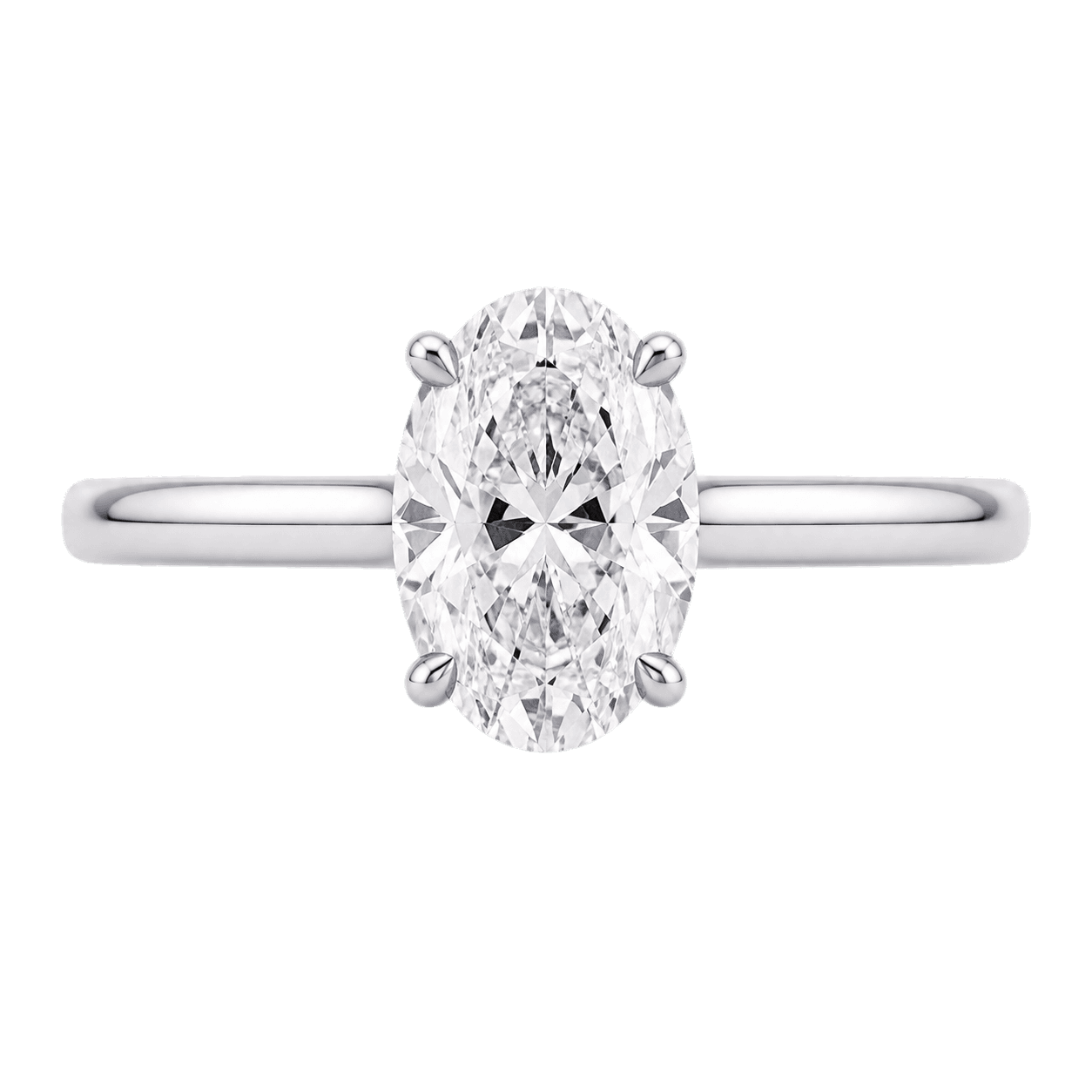
Carat measures weight, not size
A carat is one fifth of a gram — a unit of weight, not of diameter. Two one-carat diamonds can look clearly different sizes face-up depending on their shape and how they are cut: a deep-cut stone hides weight underneath where no one sees it, while a well-proportioned stone spends its weight on visible spread.
This is why shopping by carat number alone misleads. The face-up millimeter measurements on a grading report tell you how big the stone actually looks; the carat number tells you roughly what it will cost. Compare stones by both, never by carat alone.
What people actually buy
Most engagement ring center stones in the United States fall between about half a carat and one and a half carats, with the often-quoted average around one carat. Larger metropolitan markets and older buyers trend higher; many happy rings sit well below the average, especially with elongated shapes and thoughtful settings.
Treat these numbers as scenery. The average buyer did not have your partner's hand, your budget, or your taste. A ring that photographs modestly next to internet averages can still be exactly right on the hand that wears it every day.
Magic sizes and the price cliffs around them
Diamond prices jump at popular round numbers — half a carat, three quarters, one carat, one and a half, two — because demand piles up at the labels. Just below each cliff sits a value zone: a 0.90-carat stone can cost meaningfully less than a 1.00-carat stone while looking practically identical face-up.
If maximizing visible size per dollar matters, shop deliberately just under a magic size and check the millimeter spread on the report. If hitting a symbolic number matters to the wearer, that is also a legitimate priority — just make it a decision, not an accident.
Shape changes how big a carat looks
Elongated shapes — oval, pear, marquise, emerald — stretch their area across the finger and typically look larger than a round of the same weight. Ovals in particular are popular partly because they buy visible size without extra carats. Compact shapes like Asscher and princess concentrate their weight and look smaller face-up.
Setting design moves the needle too: a thin band and a slim halo both make a center stone read larger, while a wide band shrinks it visually. A modest stone in a well-designed setting often out-presents a heavier stone in a clumsy one.
Fit the carat to the hand and the life
Finger size changes how a stone reads: the same one-carat oval looks generous on a size 4.5 finger and restrained on a size 8. There is no rule that bigger hands need bigger stones — but proportion is real, and trying rings on an actual hand beats any chart.
Lifestyle matters more as stones grow. Taller stones catch on gloves, hair, and equipment; a larger stone usually means a taller setting unless you deliberately choose a low-profile design. Someone who works with their hands may be happier with a moderate stone set low than a showpiece set high.
A budget-first way to land on a number
Set the finished-ring budget first, then decide what it should buy: maximum visible size, a particular origin, a distinctive setting, or balance. If size ranks first, choose an elongated shape, shop just under a magic size, favor lab-grown or moissanite if origin is flexible, and keep the setting slim.
Then stop optimizing. A center stone chosen this way — sized for the hand, the budget, and the wearer's actual taste — does not become better by being one label heavier. The carat number appears on the invoice once; the proportions appear on the hand every day.
Interactive decision tool · about 3 minutes
Turn a carat target into a finished-ring brief
This planner will not pretend a budget converts neatly into carats. It protects the costs you choose, then shows how shape, visible spread, origin, setting, and daily wear change the comparison.- Carat
- Measures weight, not visible diameter.
- Budget
- Covers the finished ring, not only the center stone.
- Shape
- Changes how that weight presents on a hand.
Sources and references
For definitions, evidence, and further reading, continue with these specialist and first-party resources.
Quick answers
Frequently asked questions
Is a 1-carat engagement ring too small?
No. One carat is at or near the typical center-stone size, and on most hands it reads clearly as a substantial diamond, especially in an elongated shape with a slim setting. Rings only look small next to inflated social-media examples, which skew several times larger than what most people buy.
What is the average carat size for an engagement ring?
Around one carat for the center stone in the United States, with most rings falling between roughly 0.5 and 1.5 carats. Averages vary by city, age, and budget, and they describe other people's decisions — they are context for yours, not a requirement.
Do two diamonds of the same carat look the same size?
Often not. Carat is weight; visible size is face-up spread. Shape and cut proportions decide how much of the weight shows: an elongated, well-cut stone looks larger than a deep-cut or compact-shaped stone of identical weight. Compare millimeter measurements on the grading report, not carat labels.