What a promise ring actually is
A promise ring is a ring given to mark a commitment that stops short of engagement. Most often that means a couple who are serious but not ready to marry — because of age, distance, finances, or simply timing — and want a physical marker of the relationship in the meantime. It says ‘I am committed to you’ without saying ‘I am proposing marriage,’ and that distinction is the entire point.
The promise does not have to be romantic. Promise rings are also given between close friends, from parents to children, or worn alone as a purity ring or a marker of a personal commitment. Because the same object carries such different meanings, the meaning is never in the ring — it is in what the giver says when handing it over. A promise ring with no stated promise is just jewelry.
The concrete differences at a glance
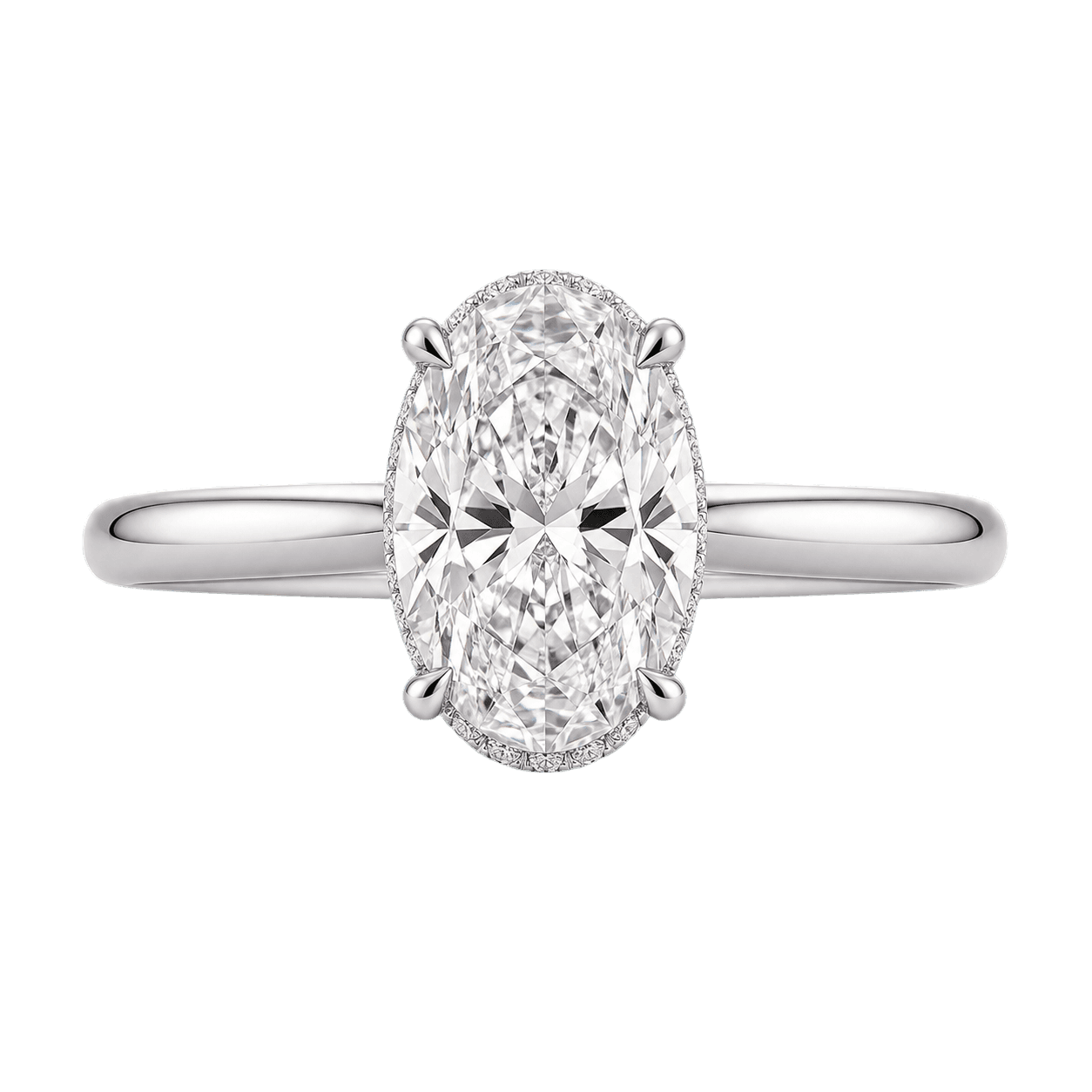
The two rings differ less in appearance than in convention. An engagement ring follows a strong script: a proposal, the left-hand ring finger, usually a center stone, and typically the largest jewelry purchase of the relationship so far. A promise ring has no script — which is freeing, but also why it needs explaining when given.
None of these conventions are enforced, and couples bend all of them. But knowing the defaults matters, because deviating from them sends signals: a diamond solitaire presented on one knee reads as a proposal no matter what you intended.
Meaning
An engagement ring marks an agreement to marry. A promise ring marks commitment without a wedding attached — the specific promise is whatever the giver states.
Typical cost
Promise rings commonly run tens to a few hundred dollars; engagement rings typically run into the thousands. A promise ring is not judged by its price.
Finger and hand
Engagement rings go on the left-hand ring finger in the US. Promise rings often go on the right hand, or any finger — partly to avoid signaling an engagement.
Stone and style
Engagement rings usually center a prominent stone. Promise rings favor bands, small accent stones, hearts, knots, or birthstones — designs that do not mimic a proposal ring.
The moment
An engagement ring arrives with a proposal, often planned as an event. A promise ring is given in a quieter moment — a gift with words attached, not a question.
How to give one without staging an accidental proposal
The failure mode is well documented: a small box, a bent knee, a ring finger — and a partner mid-gasp before you can explain. Avoid every proposal cue. Do not kneel, do not present a ring box over a candlelit dinner, and do not reach for the left hand. Give it casually and lead with the words, not the box: say what the promise is first, then produce the ring as the marker of it.
Be specific about what you are promising, because ‘a promise ring’ is not self-explanatory. ‘I am not proposing yet — but I want you to know I am serious about us’ does more work than any design choice. If your partner might expect a proposal soon, be doubly careful: an ambiguous ring at the wrong moment can land as a disappointment rather than a gift. Clarity is the entire gift.
Choosing a promise ring: budget and style norms
Spend modestly and without guilt. Promise rings commonly cost tens to a few hundred dollars, and stretching toward engagement-ring money defeats the purpose — it muddies the signal and consumes budget that a future engagement ring will want. Simple precious-metal bands, small accent stones, birthstones, and motifs like knots or hearts are the established territory, and sterling silver is a perfectly respectable metal here in a way it is not for engagement rings.
Style should reinforce the message. A ring that looks like an engagement ring — a solitaire with a prominent center stone — will be read as one by your partner and everyone who sees their hand, so choose that look only if you both understand what it is. If the promise is specifically a pre-engagement, some couples deliberately choose a placeholder band and say so; that honesty works better than an ambiguous almost-engagement ring.
What happens to the promise ring — and when to skip it
There is no rule for the transition. Most people move the promise ring to the other hand or a different finger once the engagement ring arrives; some retire it to a jewelry box, wear it on a chain, or later stack it as part of a wedding set if the styles cooperate. A few upgrade the stone or trade it in toward the engagement ring. Decide together — the promise was kept, so the ring has done its job whatever happens to it next.
Skip the promise ring entirely if the honest reason for it is delay. When both partners are ready to marry and the ring is standing in for a proposal you could simply make, it tends to read as hedging rather than commitment. It is also worth skipping if your partner would find the in-between status confusing or if the money would be better saved toward the ring that carries the actual question.
Quick answers
Frequently asked questions
What finger does a promise ring go on?
Any finger — there is no fixed rule. Many people wear a promise ring on the right-hand ring finger specifically to avoid signaling an engagement, which the left-hand ring finger implies in the United States. Some wear it on the left anyway, or on a middle finger or a chain; the promise, not the placement, carries the meaning.
How much should a promise ring cost?
Far less than an engagement ring — commonly tens to a few hundred dollars, with simple bands, birthstones, and small accent stones as the norm. There is no formula; spend what fits your finances. Stretching toward engagement-ring money muddies the signal and consumes budget a future engagement ring will need.
Can a promise ring become an engagement ring?
Yes, if you both decide it does. Some couples upgrade the stone, trade the ring in, or simply re-give the same ring with a proposal attached. More often the promise ring moves to another hand or retires when a separate engagement ring arrives. What makes a ring an engagement ring is the proposal, not the design.