Why this is not engagement-ring shopping again
The engagement ring is a statement bought by one person, often in secret, optimized to be noticed. Wedding bands are bought openly, by and for both partners, and optimized for the opposite: to be worn through sleep, showers, gym sessions, and forty years of handshakes without demanding attention. That flips the priorities — comfort, durability, and low maintenance now outrank sparkle.
It also flips the process. There is no surprise to protect, so try rings on together, wear the finalists around the shop for twenty minutes, and be honest about what irritates your finger. A band that feels slightly wrong in the store feels very wrong by month three, and ‘I’ll get used to it’ is how rings end up in drawers.
Pairing a band with the engagement ring
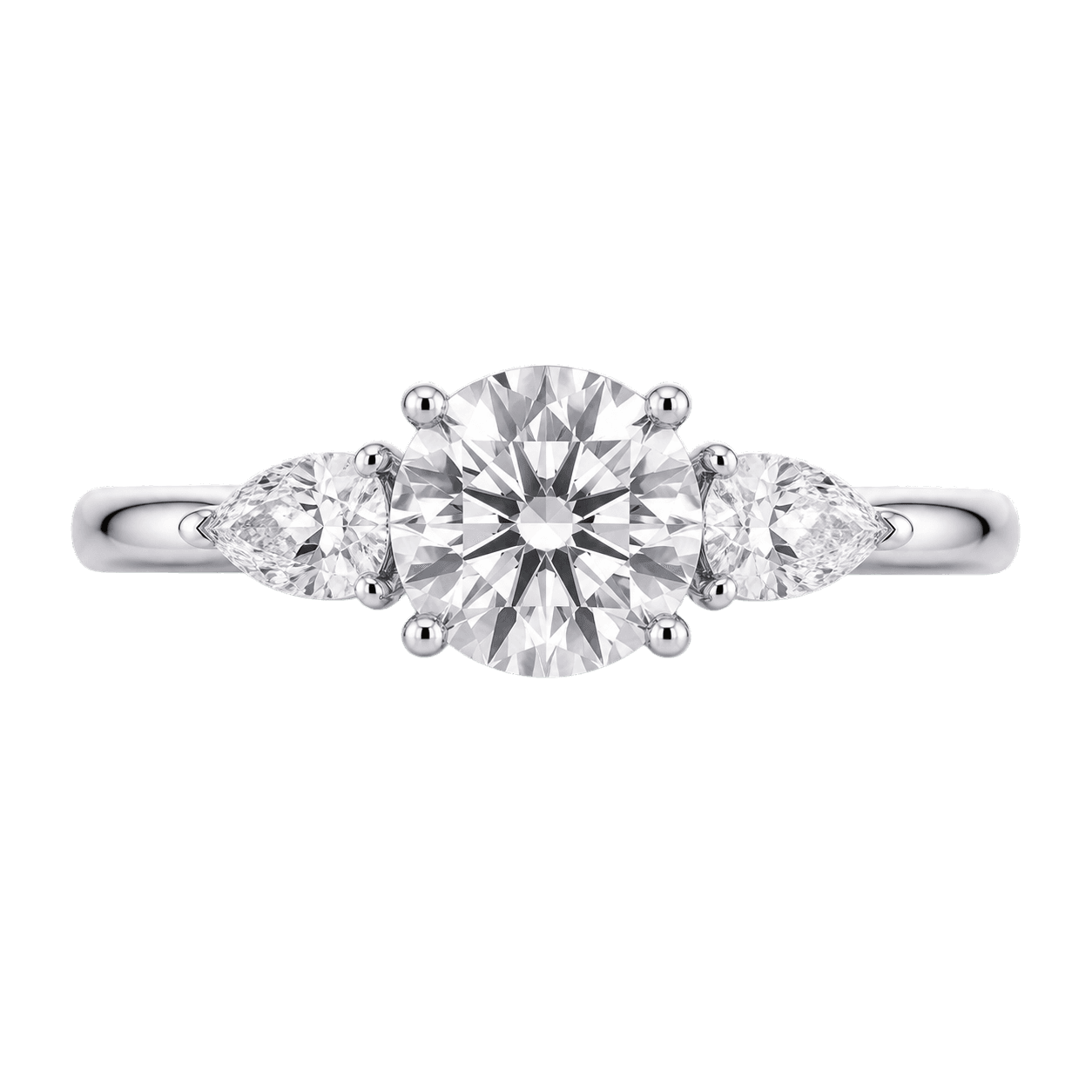
The band has to live against the engagement ring, so bring the actual ring when shopping — photographs lie about stack fit. Low-set solitaires accept nearly any straight band; rings with low baskets, wide galleries, or protruding side stones need a curved, notched, or contoured band to sit flush. Test the stack for three failures: a visible gap, wobble when you press one side, and the band spinning independently.
Metal choice in a stack is partly a hardness decision. Two rings rubbing together for decades will wear each other, and the harder one wins: a lower-karat gold band against an 18k engagement ring slowly abrades the softer ring at the contact line. Matching metals sidesteps this; if you deliberately mix — an established style, not a mistake — keep the hardness close and accept a little mutual wear as the cost.
Men’s bands: a real decision, not an afterthought
For many men this is the first ring they will ever wear daily, so fit and feel matter more than looks. Width drives everything: 4–6 mm is the mainstream range, 2–3 mm reads slim and light, 7–8 mm reads substantial and wears noticeably tighter and warmer. Profile matters just as much — a comfort-fit interior, with a rounded inner edge, is markedly easier to live with than a flat interior, especially over large knuckles.
The material question is a genuine three-way fork with real trade-offs, not a gimmick aisle. Precious metals cost more but can be resized, repaired, and refinished for life. Alternative metals like tungsten and titanium are cheap and nearly scratch-proof but effectively cannot be resized — a problem, since fingers change size over decades. Silicone is the third category: a few dollars, safe around machinery and weights, and best understood as a backup band rather than the ring.
Precious metals
Gold or platinum. The most expensive route, but resizable, repairable, and refinishable for life — the only category a jeweler can service decades from now.
Tungsten and titanium
Inexpensive and extremely scratch-resistant, but not resizable in any practical sense. A fit change means replacing the ring — fine at the price, worth knowing upfront.
Silicone
A few dollars, flexible, and designed to break away under force — the right ring for gyms, trades, and travel. Best owned alongside a metal band, not instead of one.
Stone-set bands: sparkle with strings attached
Pavé and channel-set bands add real sparkle and pair beautifully with a solitaire, but small stones held by small prongs are the most maintenance-prone construction in jewelry. A stone-set band worn 24/7 should be inspected yearly, and losing an occasional melee stone over a lifetime is normal, not a defect — check whether the seller’s warranty covers replacements before buying.
The eternity decision is really a resizing decision. A full eternity band — stones all the way around — cannot be meaningfully resized, ever; if your size changes, the ring is remade. A half-eternity band keeps the plain metal at the palm side, resizes like a normal ring, is cheaper, and looks identical from above in normal wear. Unless the full circle matters to you specifically, half-eternity is the pragmatic default.
Sizing a ring you will never take off
Width changes fit: a wide band covers more finger and wears tighter, so many jewelers suggest going up a quarter to half size for bands of 6 mm and wider. Comfort-fit interiors run slightly loose for the same marked size. This is why you size the actual band you are buying, on your own finger, rather than transferring a number measured on a thin sizer.
Fingers are not a constant. Heat, salt, exercise, pregnancy, and long-term weight change all move finger size, sometimes by half a size within a single day. Size at a normal temperature at day’s end, aim for a fit that slides on with light resistance and comes off with a firm pull, and prefer resizable designs precisely because the you of 2046 will not have the hands of today.
Practicalities: when, where, and the engraving
Start shopping two to four months before the wedding. Made-to-order and engraved bands commonly take three to six weeks, and you want the rings in hand — sized, inspected, and stored — at least two weeks before the ceremony, not in a delivery van the morning of. Buying both partners’ bands from one seller can earn a modest discount and simplifies warranties, but it is a convenience, not a rule; each partner should get the band that fits their hand and taste, even from different shops.
Engraving — a date, initials, coordinates, a private joke — is inexpensive and usually the last irreversible step, so confirm spelling and date format in writing and know that most sellers void or shorten the return window once a ring is engraved. Order it after you are certain of the size. And the bands do not need to match each other: shared metal or a shared engraving is plenty of symbolism for two rings doing the same job on very different hands.
Quick answers
Frequently asked questions
How much should a wedding band cost?
Plain precious-metal bands commonly run from about $200 to $1,500 depending on metal, width, and maker, while pavé, eternity, and platinum designs run higher — and alternative metals or silicone cost far less. There is no salary rule. Because plain bands are simple products, this is the rare jewelry purchase where straightforward comparison shopping works well.
Should wedding bands match?
Only if you both want them to. Matching sets are a tradition, not a requirement, and partners often have different tastes, hand sizes, and durability needs — a pavé band and a brushed titanium band can belong to the same marriage. Many couples share one element, like metal color or an inside engraving, and let everything else differ.
Can you wear a wedding band without an engagement ring?
Yes. Many people wear only the wedding band day to day — for comfort, work, or preference — and save the engagement ring for occasions, while others never have an engagement ring at all. The band alone fully signals married. If it will be the only ring, it is worth choosing a slightly more distinctive design.