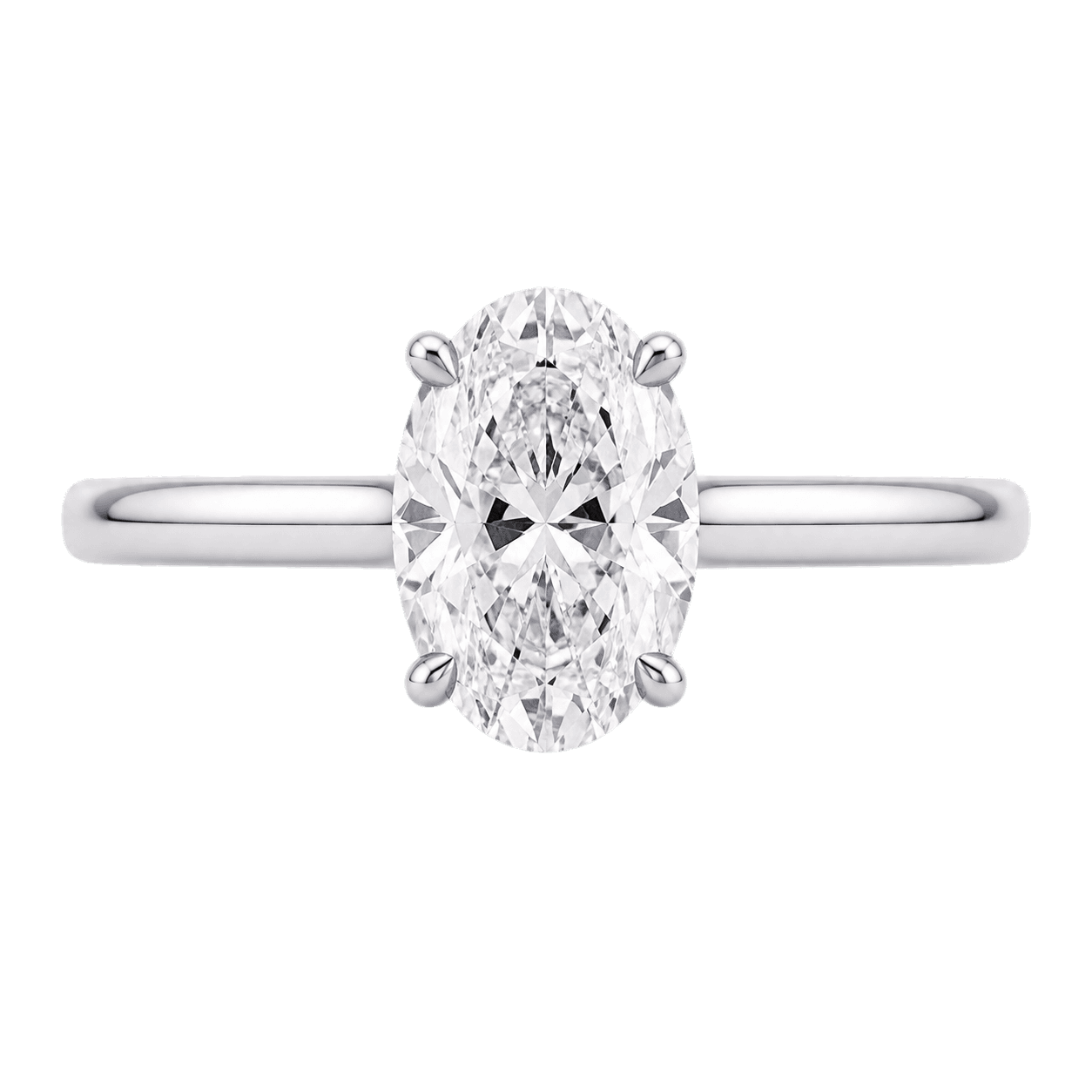
Two rings, two moments
The engagement ring arrives with the proposal and is worn through the engagement. It typically carries the center stone and most of the combined budget, because it is designed to be noticed. The wedding ring — also called a wedding band — is exchanged during the ceremony by both partners and tends to be a plainer band designed for constant, comfortable wear.
After the wedding, most people wear both rings together on the same finger, though plenty wear only the band day to day and save the engagement ring for occasions. There is no rule that survives contact with a person's actual comfort.
Which finger, which order
In the United States and much of the world, both rings go on the left-hand ring finger. Tradition places the wedding band first — closest to the heart — with the engagement ring stacked outside it. Several countries reverse hands entirely, and many people simply wear the combination that feels balanced.
During the ceremony itself, some brides move the engagement ring to the right hand so the band can be placed directly, then restack afterward. It is choreography, not law; decide before the ceremony so no one is juggling jewelry at the altar.
Making the two rings work together
A wedding band has to live against the engagement ring, so buy them as a pair in mind even if years apart. Low-set solitaires accept almost any straight band; rings with large stones, low baskets, or ornate galleries may need a curved, notched, or contoured band to sit flush.
Bring or borrow the engagement ring when shopping for the band, and test the stack for gap, wobble, and spin. Matching metal color is common but optional — deliberate mixed-metal stacks are established style, and matching hardness matters more, since a much harder band can wear a softer ring where they rub.
What each ring usually costs
The engagement ring usually carries the center stone and therefore most of the spend; wedding bands commonly run from a few hundred dollars for a plain precious-metal band to a few thousand for pavé or platinum designs. Couples buying both should budget them together rather than being surprised by the second purchase.
Both partners need wedding bands, and they do not need to match each other or cost the same. A plain band's price is driven by metal, width, and maker — a place where comparison shopping is easy and honest.
Do you actually need both rings?
No. Some couples skip the engagement ring and put the whole budget into wedding bands or a single ring that does both jobs. Others propose with the wedding band itself, or with an heirloom, or with no ring at all and choose later. The two-ring convention is a default, not a requirement.
A popular middle path is one ring designed to work alone: a solitaire worn daily without a band, or a wider, stone-set band that reads as both. If that is the plan, say so while shopping — it changes what durability and profile the design needs.
Quick answers
Frequently asked questions
Do you wear your engagement ring at the wedding?
Yes, in most cases. Common practice is to move it to the right hand for the ceremony so the wedding band goes on the bare ring finger first, then return it to sit outside the band. Or simply leave it in place and stack the band outside — no guest will audit the order.
Do men get an engagement ring too?
Increasingly, yes — men's engagement rings exist and are growing in popularity, either as a band worn from the proposal or as part of a mutual exchange. Traditionally men wore only a wedding band, but there is no rule; it is a choice each couple makes.
Can the engagement ring be the wedding ring?
Yes. Some couples use one ring for both roles, adding no band at the ceremony or exchanging simple bands while the engagement ring remains the primary ring. If one ring will do both jobs for decades of daily wear, prioritize a secure, comfortable, resizable design when choosing it.